Standing water out โ from carpets, hard floors and basements โ with pumps and professional extraction tools. One call connects your job with an independent local pro, and drying starts the moment the water is gone.
One call is the whole intake. Tell us where the water is, where it came from, and when it started โ we match the job with a local pro and they confirm the scope with you before any work begins.
๐ Call Now Prefer email? Write to us โNo forms, no obligation. A referral service โ not a direct service company.

Water removal sounds simple, and the idea is: get liquid water out of the home as completely as possible, as soon as possible. The craft is in the word completely. A mop and a rental vacuum leave water in carpet padding, under floor boards and along wall bases, and that leftover water keeps damaging the home for days. Professional extraction uses stronger vacuum, weighted tools and repeated passes to pull water out of the materials themselves, not just off the top of them.
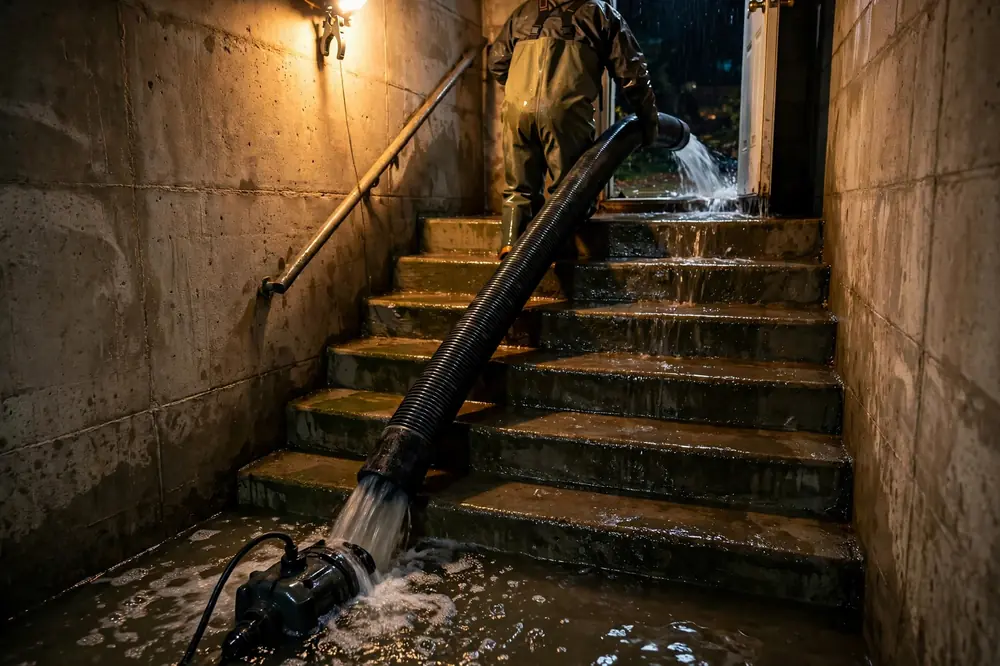
The difference shows up in the drying phase. A room that was extracted well can dry in days with standard equipment. A room that was only surface-dried holds moisture deep in the floor system, and that moisture migrates โ into baseboards, into the wall, into the room next door. In Pittsburgh basements, where water often arrives through a floor drain or a failed sump, removal also means pumping: moving pooled water up and out before extraction of the floors and contents can even begin.
Removal is also where belongings are saved or lost. Books, boxes and furniture sitting in water keep soaking while water stands. A crew that extracts promptly and moves contents to dry ground in the same visit protects far more of the home than the floor alone, and photographs what was moved and what was wet, which supports the claim file.
Six parts of one job: bulk water out first, then the water hiding inside materials.
For basements and low areas with pooled water, pumps move the bulk out to a safe discharge point so the floor work underneath can begin.
Repeated extraction passes, including weighted tools that compress carpet and pad, pull out water that a single pass leaves behind.
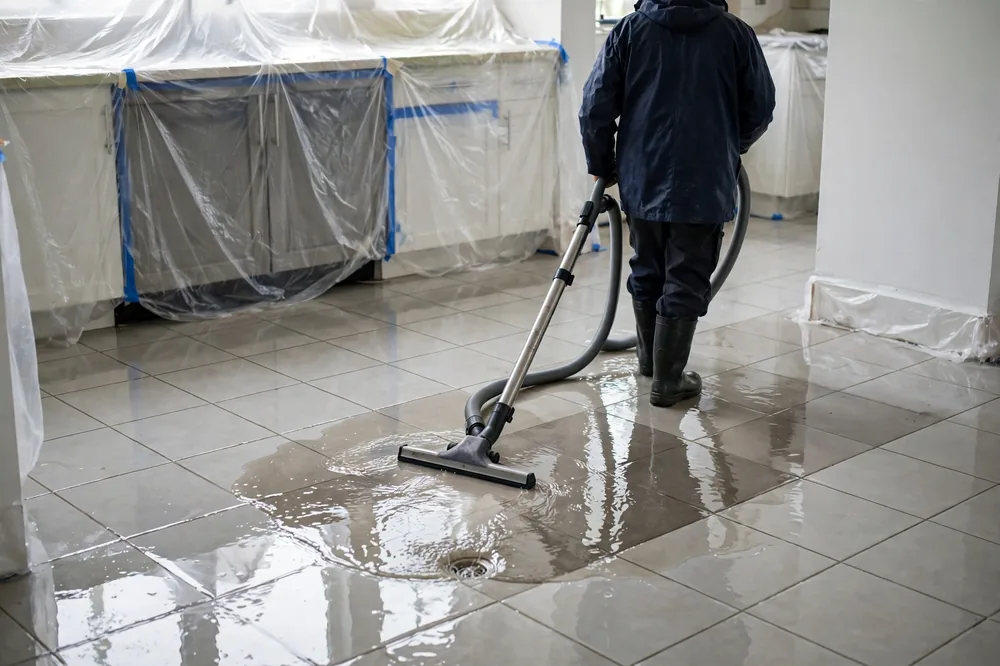
Squeegee and vacuum tools clear water from tile, concrete and sealed floors, with attention to grout lines, seams and edges where water lingers.
Carpet is lifted at a corner to check the pad. Wet pad that cannot dry in place is removed so the carpet and subfloor can actually dry.
Readings through and under hard flooring locate trapped water, and the crew explains the drying or access options for reaching it.
Extraction ends with air movers and dehumidifiers placed and running, so removal flows straight into structural drying without a gap.
Five steps from pooled water to a room ready to dry.
Removal uses the right tool for each layer of water โ pooled, surface and soaked-in โ because no single tool handles all three well.
Submersible pumps with discharge hoses handle the deep end of the job in basements and garages, moving pooled water out far faster than any vacuum could.
Tools that add the operator's weight to the extraction head squeeze carpet and padding together, forcing out water that light tools skim past. Crews use them on saturated carpet before any drying call is made.
Sealed mat systems pull air through the seams of hardwood and laminate floors, drawing moisture out of the boards and the subfloor below without lifting the whole floor in many cases.

Common removal scenes at the start of a visit and once extraction has finished.
Water covering the floor, boxes and stored items sitting in it.
Bulk water pumped out, floor extracted, contents moved to dry ground and drying underway.
Carpet squelching underfoot, padding holding water against the walls.
Deep extraction completed, unsalvageable padding removed, carpet left in a condition that can dry.
Sheet of water across the tile, creeping under the cabinets.
Water extracted including grout lines and cabinet edges, readings taken under the toe-kick area.
Three problems that trace back to water that stayed too long or hid too well.
Carpet pad holds water long after the surface feels dry. Proper extraction, and removal where the pad is spent, ends that slow leak into walls and subfloors.
Hard floors can look fine while the subfloor below stays wet. Readings and mat drying reach that hidden layer before it damages boards from underneath.
Every hour in standing water claims more belongings. Prompt pumping and extraction paired with moving contents to dry ground keeps the loss list short.
Depth, surfaces and time set the size of a removal job.
A thin sheet across one room and a basement under pooled water are different jobs, calling for different mixes of pumping and extraction.
Carpet with pad, hardwood, laminate, tile and bare concrete each need their own extraction approach and their own drying follow-up.
Fresh water sits on surfaces. Older water lives inside materials, and that difference decides how many passes and how much access work removal takes.
A spare room and a packed storage basement scope differently, because moving, sorting and protecting belongings is part of the removal visit.
Timing, carpet and padding, trapped water, and how pumps and extraction tools divide the work.
Nine other ways the network helps Pittsburgh homes after water gets in.
Tell us what happened and where. We will match your job with an independent local water damage professional who serves your neighborhood.
๐ Call NowCalls are the fastest route โ water does not wait for inboxes. Email works too if the situation is stable and you are planning ahead.
Describe the water, the source and your neighborhood. We match the job with a local pro from there.
rankandrent2+pittsburgh-water-damage@gmail.com โ include your ZIP and a few photos if the situation is stable.
Pittsburgh, PA and 15 suburbs across the 43-ZIP metro โ from Wexford to Glassport, McKees Rocks to Monroeville.
One call covers intake, matching and scheduling. The pro confirms scope and cost with you directly before any work starts โ nothing begins on a surprise.
๐ Call Now or Browse the services first โ