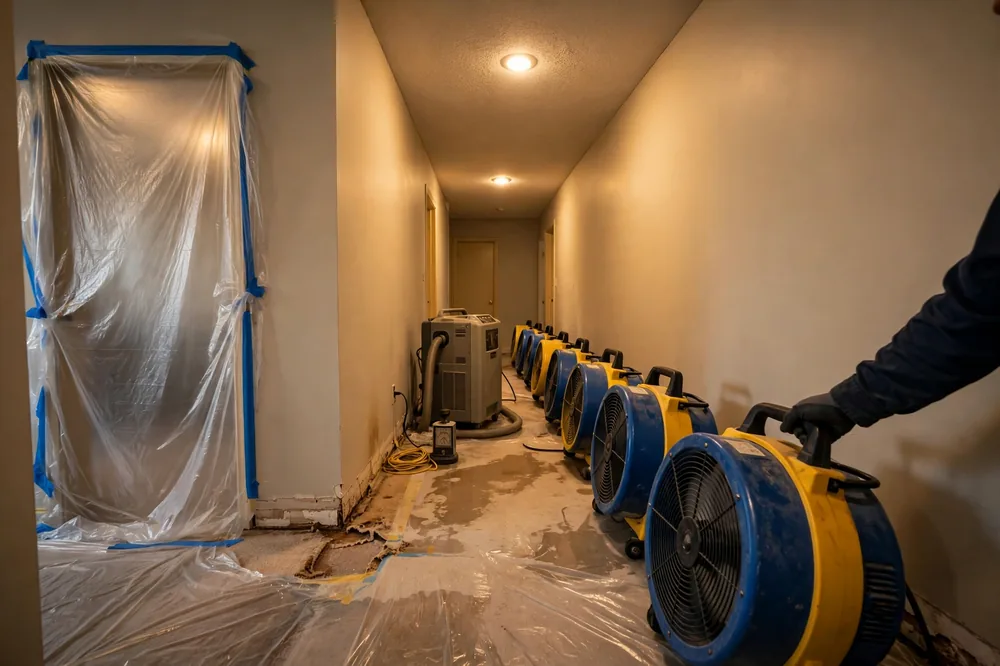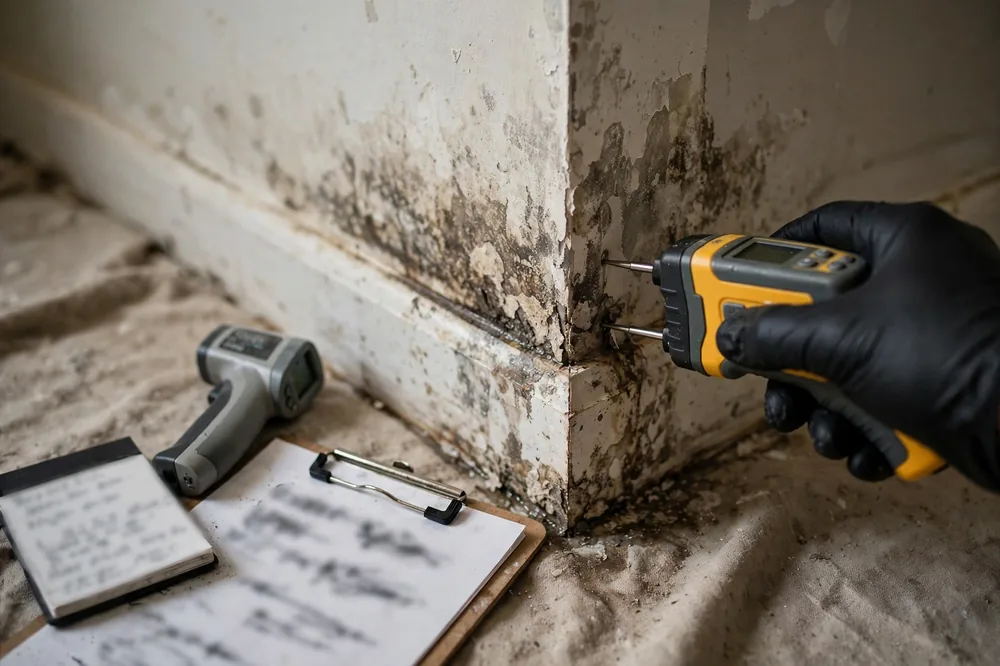
Restoration is the whole job, from the first extraction pass to the last coat of paint. One call describes what happened, and we connect the job with an independent local pro who dries, cleans and rebuilds the affected rooms in the right order.
One call is the whole intake. Tell us where the water is, where it came from, and when it started โ we match the job with a local pro and they confirm the scope with you before any work begins.
๐ Call Now Prefer email? Write to us โNo forms, no obligation. A referral service โ not a direct service company.

Water damage restoration means returning a wet, disrupted home to a clean, dry and usable condition. It is not a single task. It is a sequence: stop the source, remove standing water, dry the structure, clean the affected surfaces, and then repair what the water damaged. When the steps happen in that order, more of the home can be saved and the repair phase stays focused on what truly needs rebuilding.
Pittsburgh homes add their own twists. Many houses in the city and the older suburbs were built long before modern plumbing and waterproofing, with plaster walls, older supply lines and finished basements tucked below grade. A leak that starts in a kitchen in Lawrenceville can travel along joists and show up two rooms away. A basement in Bethel Park can take water from a failed water heater and from foundation seepage in the same week. A good restoration plan sorts out the source first, then maps how far the water actually moved.
That mapping matters because water hides. It soaks into carpet padding, wicks up drywall, and sits under hard floors where a quick look misses it. Restoration crews use moisture readings to find those hidden pockets, document what they find, and dry or remove each material based on what the readings show. The result is a room that is not just dry on the surface, but dry through the wall and floor system as well.
Six parts make up a complete restoration job. Your pro confirms which of them your home needs after the first walk-through.
A room-by-room check with moisture readings that shows where the water went, what it touched, and which nearby rooms need attention even if they look dry.
Pumps and extraction tools remove pooled water from carpets, hard floors and low areas so drying can start from a workable point instead of a soaked one.
Air movers and dehumidifiers are placed for the layout of your rooms and checked on return visits, with readings logged until materials reach a dry reading.
Padding, swollen board, soaked insulation and damaged drywall sections come out in a controlled way, bagged and taken out of the home as part of the cleanup.
Hard surfaces that remain are cleaned, and affected areas are treated as part of the drying plan so rooms are ready for repair work once they read dry.
Drywall, flooring, trim and paint go back in after drying is verified, returning the room to normal use and closing out the job with a final walk-through.
Five steps, in the order that protects your home and keeps the work clear from start to finish.
Restoration runs on measurement as much as on machines. The tools below are how a crew knows where the water is, how fast it is leaving, and when a room is truly ready for repair.
Pin and pinless meters read moisture inside wood, drywall and subfloor without guesswork. Crews check the same spots each visit, so the drying log shows a clear trend rather than a single snapshot.
Weighted extraction tools pull water deep out of carpet, while air movers push dry air across wet surfaces in a planned pattern. Placement matters more than sheer count, and crews adjust the pattern as readings change.
Dehumidifiers pull the moisture the air movers lift out of materials. In closed Pittsburgh basements and plaster-walled rooms, holding the air dry is what lets the structure itself give up its water day after day.

Plain descriptions of how common restoration scenes look at the start of a job and once the work has moved through them.
Carpet saturated, water still spreading toward the hallway and baseboards.
Carpet extracted, padding removed where unsalvageable, drying underway, then flooring and trim restored.
Cabinet base swollen, floor boards cupping, damp odor under the sink.
Affected cabinet sections opened and dried, damaged boards replaced, and the floor finished to match the room.
Ceiling stain growing, paint bubbling, plaster soft to the touch.
Wet plaster removed where damaged, cavity dried and verified, then the ceiling closed, finished and painted.
Most restoration calls start as one of these three scenes. Each one needs the full sequence, not a single visit with a fan.
A small stain on the surface often means a larger wet area inside the wall or under the floor. Restoration finds the true edges of the loss so repairs cover the whole problem, not just the visible part.
Towels and a household fan handle the surface and leave the padding, subfloor and wall base wet. A full restoration dries the whole system and checks it with readings before anything is closed back up.
Without one plan, extraction, drying and repairs happen in the wrong order and rooms stay torn up for weeks. Restoration sequences the whole job under one scope, so each phase hands off cleanly to the next.
No two losses scope the same way. These are the factors your pro weighs on the first walk-through.
Clean supply water, appliance discharge and flood water each call for a different level of cleaning and a different call on which materials can stay.
Readings in adjoining rooms, closets and the level below set the true footprint of the job, which is often larger than the room where the leak started.
Carpet and padding, hardwood, laminate, plaster and drywall each dry at a different pace and each has a different point where removal makes more sense than drying.
A leak found within the hour and a leak found after a vacation week scope very differently, because time decides how deep water soaks and whether odor sets in.
Straight answers about scope, staying in the home, what can be saved, and how the paperwork works. Anything else, ask on the call.
Nine other ways the network helps Pittsburgh homes after water gets in.
Tell us what happened and where. We will match your job with an independent local water damage professional who serves your neighborhood.
๐ Call NowCalls are the fastest route โ water does not wait for inboxes. Email works too if the situation is stable and you are planning ahead.
Describe the water, the source and your neighborhood. We match the job with a local pro from there.
rankandrent2+pittsburgh-water-damage@gmail.com โ include your ZIP and a few photos if the situation is stable.
Pittsburgh, PA and 15 suburbs across the 43-ZIP metro โ from Wexford to Glassport, McKees Rocks to Monroeville.
One call covers intake, matching and scheduling. The pro confirms scope and cost with you directly before any work starts โ nothing begins on a surprise.
๐ Call Now or Browse the services first โ