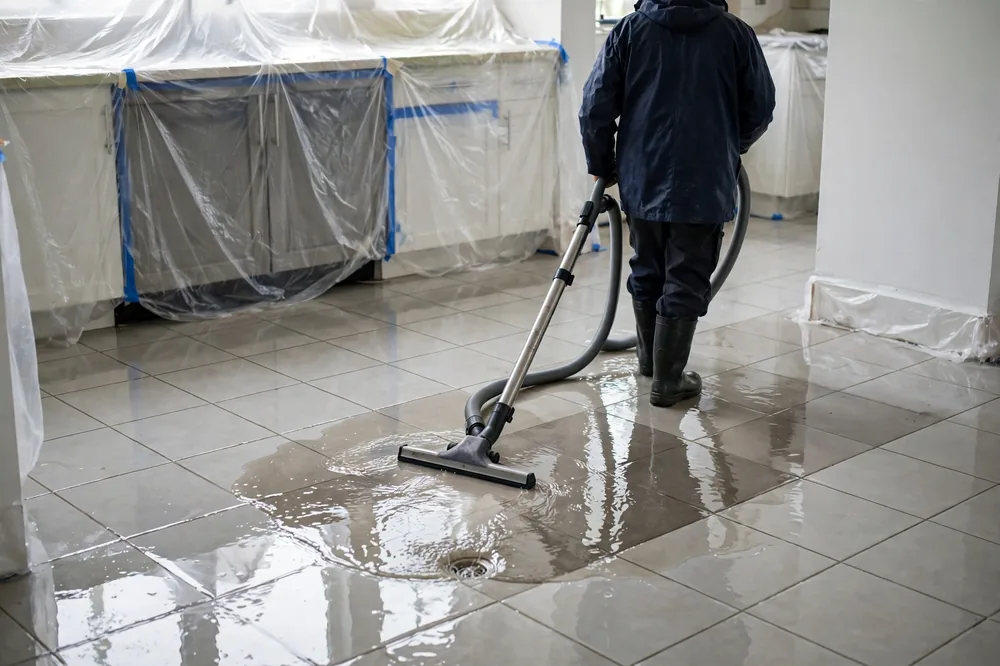
Mitigation is the urgent first phase: stop the spread, get the water out, and protect everything that is still dry. One call connects your job with an independent local pro who starts with the steps that save the most material.
One call is the whole intake. Tell us where the water is, where it came from, and when it started โ we match the job with a local pro and they confirm the scope with you before any work begins.
๐ Call Now Prefer email? Write to us โNo forms, no obligation. A referral service โ not a direct service company.

Mitigation means limiting the damage a water event causes, before anyone talks about repairs. The pipe may be fixed and the puddle may look small, but water keeps moving after the visible leak stops. It wicks up drywall, creeps under flooring, and soaks into padding and cabinet bases. Mitigation is the set of steps that interrupts that movement: extraction, targeted removal of material that cannot dry, and controlled drying of everything that can.
In Pittsburgh, speed matters for a second reason: the housing stock. Older homes across the city and suburbs pair plaster and hardwood with finished basements and layered flooring added over decades. Water finds the seams between those layers and travels along them. A mitigation crew that knows local construction checks the room below, the closet behind the wall, and the floor system under the finish floor, because that is where Pittsburgh water usually hides.
Mitigation is also the phase insurers pay the most attention to. Policies expect a homeowner to take reasonable steps to limit further loss, and a documented mitigation visit โ photos, readings, extraction and drying started promptly โ is the clearest proof of those steps. It protects the claim at the same time as it protects the house, and it sets up every repair that follows.
Six actions, all aimed at one goal: the loss stops growing today, so repairs stay as small as they can be.
The crew confirms the water is stopped, looks for electrical or structural concerns, and plans the work so the first hour is spent where it matters most.
Pumps and extraction tools clear pooled water from floors, carpets and low spots, cutting off the supply that keeps soaking into walls and subfloors.
Furniture is moved to dry ground or lifted on blocks, and belongings are shifted out of wet zones so both the items and the floor under them can dry.
Baseboards may be lifted and small inspection openings made so wall cavities can dry. Material that cannot be saved is removed in a planned, documented way.
Air movers and dehumidifiers are set in a pattern based on readings, then checked and adjusted on return visits until the structure reaches a dry reading.
Dated photos, moisture logs and scope notes are gathered from the first visit onward, ready to hand to your adjuster or keep with your own records.
Five steps that run in order, starting the moment the crew walks in.
Mitigation tools are chosen for one job: removing water faster than it can spread, then proving with readings that the spread has stopped.
Tools that press water out of carpet and padding together remove far more moisture than a surface pass. Less water left in the pad means less water wicking into walls while drying runs.
Small venting systems push dry air inside wall cavities through neat openings, drying studs and the back of drywall without removing whole wall sections in many cases.
Moisture meters turn guesswork into a plan. Readings decide where equipment goes on day one, what gets adjusted on day two, and when mitigation is honestly finished.

How common mitigation scenes look on arrival, and once the first phase has done its work.
Water pooling under appliances, cabinet base soaking, floor damp several feet from the sink.
Standing water removed, cabinet cavity vented and drying, dry parts of the kitchen protected and in use.
Carpet saturated, padding holding water against the baseboards.
Water extracted from carpet and pad, padding removed where unsalvageable, drying underway along the walls.
Boards damp at the seams, moisture reading high beneath the surface.
Surface water gone, drying mats and air movers working the floor system, readings falling each visit.
Mitigation exists to stop three things that make water damage worse by the hour.
Water inside a wall cavity keeps feeding mold-friendly damp long after the floor looks dry. Mitigation finds and dries those cavities early, while openings can still stay small.
Wood floors cup and cabinet bases swell when water sits against them. Prompt extraction and directed drying give both a real chance of being saved instead of replaced.
When days pass with no documented action, it is harder to show the loss was sudden and cared for. A prompt, photographed mitigation visit creates the record as it does the work.
The first walk-through weighs these factors before the plan is set.
An hour-old leak and a week-old leak need very different levels of opening, drying and material removal, even when the room looks similar.
Wall cavities, floor systems, the ceiling below and adjoining closets all count. Readings, not appearances, draw the true boundary of the job.
Porous materials like padding and insulation give up water poorly and often come out, while many hard materials dry in place with the right air pattern.
Finished basements, built-ins and tight Pittsburgh row-house layouts shape how equipment is placed and how cavities can be reached for drying.
What the first visit looks like, how insurance views mitigation, and what you can safely do before the crew arrives.
Nine other ways the network helps Pittsburgh homes after water gets in.
Tell us what happened and where. We will match your job with an independent local water damage professional who serves your neighborhood.
๐ Call NowCalls are the fastest route โ water does not wait for inboxes. Email works too if the situation is stable and you are planning ahead.
Describe the water, the source and your neighborhood. We match the job with a local pro from there.
rankandrent2+pittsburgh-water-damage@gmail.com โ include your ZIP and a few photos if the situation is stable.
Pittsburgh, PA and 15 suburbs across the 43-ZIP metro โ from Wexford to Glassport, McKees Rocks to Monroeville.
One call covers intake, matching and scheduling. The pro confirms scope and cost with you directly before any work starts โ nothing begins on a surprise.
๐ Call Now or Browse the services first โ