โœ‰๏ธ rankandrent2+pittsburgh-water-damage@gmail.com
Pittsburgh, PA ยท Three Rivers Region ยท 43-ZIP Service Area

Flood Cleanup in Pittsburgh, PA

After river water or storm water gets in, cleanup means muck-out, washing, sanitizing and drying โ€” in that order. One call connects your home with an independent local pro who handles flood water as the contaminated job it is.

๐Ÿ’ง Water in your home right now?

Talk to the Pittsburgh team

One call is the whole intake. Tell us where the water is, where it came from, and when it started โ€” we match the job with a local pro and they confirm the scope with you before any work begins.

๐Ÿ“ž Call Now Prefer email? Write to us โ†’

No forms, no obligation. A referral service โ€” not a direct service company.

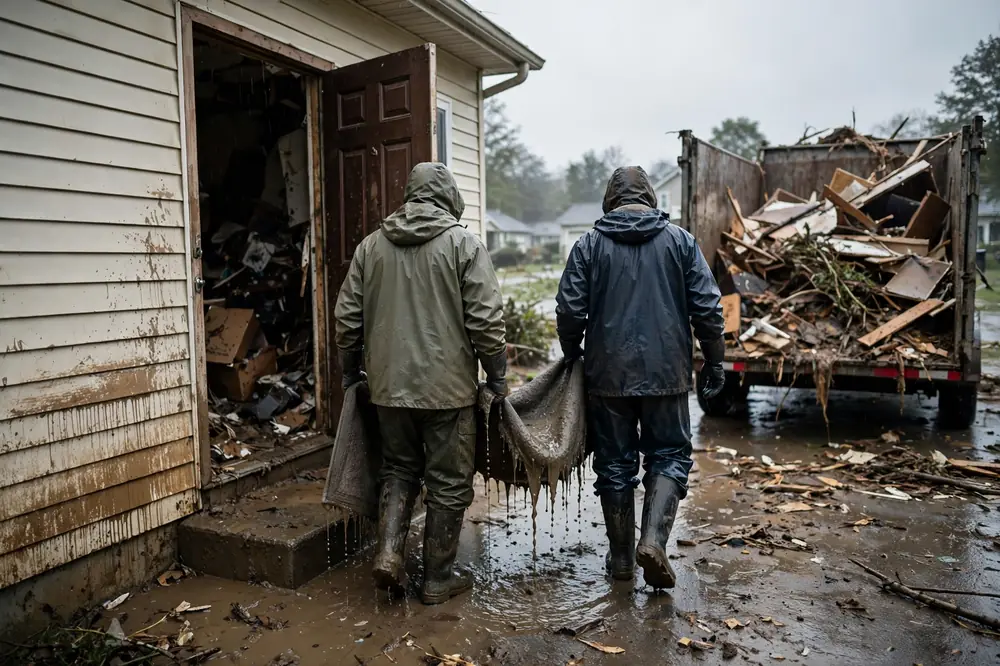
Crew mucking out mud and debris during flood cleanup in a Pittsburgh home
After the water recedes

Understanding Flood Cleanup in Pittsburgh, PA

Flood cleanup starts where ordinary water damage work does not: with mud, silt and debris left behind by water that came from outside. River water from the Ohio, Monongahela or Allegheny, and storm water running off streets and hillsides, carries soil and contaminants into the home. When it recedes, it leaves a layer of silt on every surface and soaks porous materials through. Cleanup is the work of removing that layer, sorting what can be cleaned from what cannot, and washing and sanitizing what stays.

Pittsburgh geography shapes the job. River towns like McKeesport, Elizabeth, Glassport and Clairton sit along the Monongahela, while creek valleys โ€” Chartiers, Turtle Creek, Pine Creek โ€” flood homes that never see the river itself. Many of these homes are older, with stone or block foundations and basement living space, so flood water often reaches finished rooms, stored belongings and the mechanical systems of the house in a single event.

Timing and safety come before everything else. Flood water and electricity are a dangerous mix, and a basement that held water may have a shifted water heater, a soaked panel area or a weakened stair. A flood cleanup crew enters carefully, documents conditions with photos before moving anything, and works from the safest area toward the hardest-hit one, so the home is cleaned in a controlled sequence rather than all at once.

  • Safety and electrical check before anyone wades in
  • Mud and silt removed while still wet and workable
  • Porous items sorted out, hard surfaces washed and sanitized
  • Photos taken before cleanup for the claim record
What is covered

What Our Flood Cleanup Service Includes

Six parts that take a flooded space from mud and silt to clean and drying.

Entry safety check

A walk of the space for electrical, structural and slip hazards before cleanup starts, with problem areas flagged and worked around until they are resolved.

Muck-out and debris removal

Mud, silt and flood debris are shoveled, hauled and bagged out of the home, and damaged porous material is removed as part of the same pass.

Contents sorting

Belongings are sorted with you into items to clean, items to store while work runs, and items that flood water has made unsalvageable, all photographed.

Washing down surfaces

Floors, walls and hard fixtures are washed to remove the silt film flood water leaves, working from the highest water line down to the floor drains.

Sanitizing treatment

Cleaned hard surfaces are treated with disinfecting products suited to flood contamination, so the space is hygienic before drying and repairs move in.

Drying setup

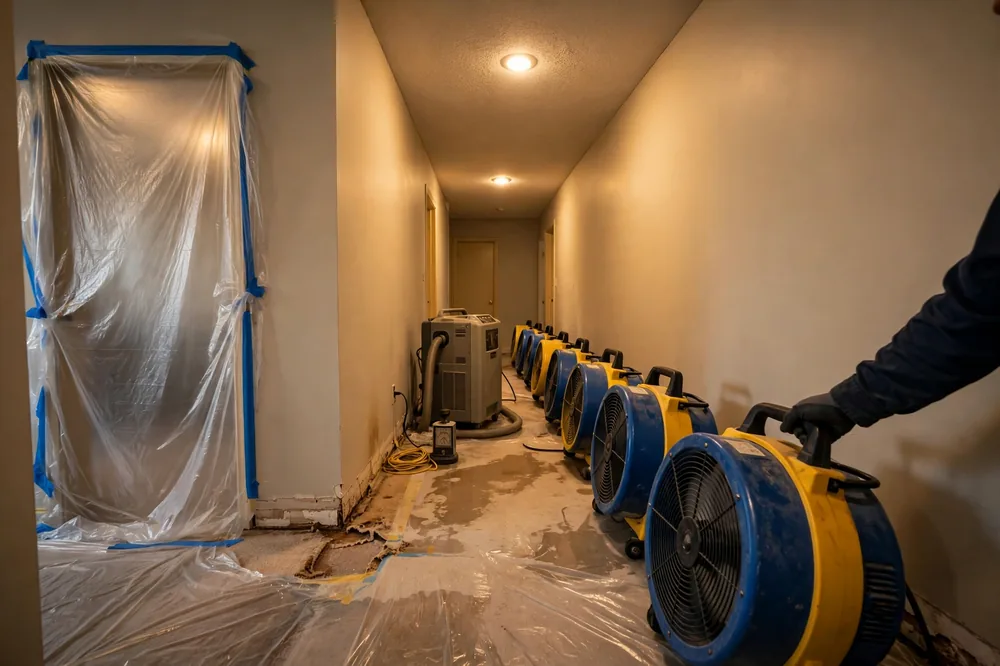
Once surfaces are clean, air movers and dehumidifiers are placed and monitored, drying the structure that the flood soaked on its way through.

Step by step

Our Flood Cleanup Process

Five steps, sequenced for safety first and thoroughness after.

Tell us which rooms took water, how high it rose and whether power is on in those areas. We match the job with a local pro, and the pro confirms the scope and cost with you before work starts. If the area is not yet safe to enter, the pro will say so plainly and plan the start for when it is.
The crew photographs rooms, water lines and belongings as found โ€” the record a claim needs โ€” then checks electrical points, appliances and structure. Cleanup routes are planned so crews are never working through a hazard to reach a dirty corner.
Shovels, squeegees and haul-out come next. Silt is far easier to move while it is wet, so this step runs promptly. Damaged carpet, padding and soaked porous items come out in the same pass and are documented as they go.
Hard surfaces are washed down to bare, clean material, then treated. Walls are cleaned to above the water line, floors are worked to the drains, and fixtures are washed and disinfected before anyone calls the space clean.
Drying equipment is set and checked on return visits, with moisture readings logged in walls and floors. When readings show the structure dry, the cleanup phase closes and the repair conversation โ€” drywall, flooring, finishes โ€” can begin on solid ground.
Tools & methods

Tools & Methods for Flood Cleanup

Flood work is physical work backed by a careful order of operations. These are the methods that make it thorough.

Muck-out while the silt is wet

Crews move mud and silt with flat shovels and squeegees toward drains and doors while it still flows. Dried silt turns to dust and takes far longer to clear, so the first working day matters.

Wash-down before disinfection

Disinfecting products cannot work through a layer of silt. Surfaces are washed clean first, rinsed, and only then treated โ€” the order is what makes the treatment count.

Protective gear as standard

Boots, gloves and protective clothing are standard on flood jobs, and respiratory protection is used where silt dust or odor calls for it. Flood water is treated with respect from the first step inside.

Drying fans set up in a home after flood cleanup washing is complete
Change you can see

Before and after.

How flooded spaces look at first entry, and once cleanup has moved through them.

Before

Ground floor after river water

Silt across the floors, debris piled in corners, water line marked on the walls.

After

Rooms mucked out and washed

Mud and debris hauled out, surfaces washed and sanitized, drying equipment running.

Before

Basement after a creek flood

Stored items soaked, carpet saturated with muddy water.

After

Contents sorted, floor cleaned

Unsalvageable items removed and documented, cleanable items washed, concrete floor sanitized and drying.

Before

Garage and entry after a storm surge

Mud tracked through the entry, silt settled along the walls.

After

Entry washed down and treated

Silt cleared to the drains, walls washed above the water line, surfaces treated and left drying.

Problems Solved by Our Flood Cleanup Services

Flood water leaves three problems behind that a normal cleaning cannot solve.

01

Contamination hiding in silt

The mud on the floor is the visible part. The same water soaked into porous items and wall bases. Cleanup removes what holds contamination and treats what stays, in the right order.

02

Odor that returns after a quick clean

Flood odor lives in silt residue and soaked material. Washing to bare surfaces and removing spent porous items is what keeps the smell from coming back on the next humid day.

03

A claim with no record of the loss

Cleaning first and photographing later loses the evidence. Flood cleanup documents water lines, contents and conditions before the first shovel, so the record matches the loss.

๐Ÿ“ž Call Now

Scope factors

What Decides the Scope of a Flood Cleanup Job

Height, contents and construction set the size of a flood cleanup.

How high the water rose

A few inches in a basement and water reaching living-space outlets are different jobs, in cleaning area, in wall treatment and in what must come out.

What the water carried in

Mostly clear storm water and mud-heavy river water leave different amounts of silt and debris, which changes the muck-out and washing workload.

Finishes and contents affected

Finished rooms with carpet and furniture scope larger than an unfinished storage basement, because sorting decisions take real time.

Foundation and wall type

Concrete, block, stone and finished drywall each clean and dry differently, and older Pittsburgh foundations often need extra attention at the joints.

Good questions

Flood Cleanup Questions

How flood work differs from a leak cleanup, what has to go, staying safe around electricity, and when to start.

Ask Your Question

River and storm water carries soil, road runoff and whatever it picked up on the way in, so it is treated as contaminated. Porous items it soaked are usually removed rather than cleaned, hard surfaces are washed and disinfected, and crews wear protective gear. A clean-water leak from a pipe is handled differently, because the water itself did not bring contaminants with it.
Carpet and padding, upholstered furniture, mattresses, stuffed toys and soaked insulation that river water reached are usually discarded, because they hold contaminants deep inside. Food and medicine that contacted flood water go out as well. Hard items like metal, glass and solid wood can often be washed and disinfected, and the crew sorts items with you and documents what is removed.
Only when you are sure the electrical risk is controlled. Do not step into standing water that may be in contact with a panel, outlets or appliances that are still live. If you can reach the breaker safely from a dry spot, shut off power to the wet area; otherwise wait and let the crew or an electrician handle it. Watch for sagging ceilings and keep children and pets out until the area is checked.
As soon as it is safe to enter and the water has stopped rising. Mud and silt are far easier to remove while they are still wet, and every day of delay lets moisture soak deeper into walls and floors and lets odor set in. Photograph everything first for your records, then let the muck-out and washing begin.
Keep exploring

Related Services

Nine other ways the network helps Pittsburgh homes after water gets in.

One call starts it

Need Flood Cleanup in Pittsburgh, PA?

Tell us what happened and where. We will match your job with an independent local water damage professional who serves your neighborhood.

๐Ÿ“ž Call Now
Get in touch

Contact Us for Flood Cleanup

Calls are the fastest route โ€” water does not wait for inboxes. Email works too if the situation is stable and you are planning ahead.

๐Ÿ“ž

Call the intake line

Describe the water, the source and your neighborhood. We match the job with a local pro from there.

โœ‰๏ธ

Email us

rankandrent2+pittsburgh-water-damage@gmail.com โ€” include your ZIP and a few photos if the situation is stable.

๐Ÿ“

Service area

Pittsburgh, PA and 15 suburbs across the 43-ZIP metro โ€” from Wexford to Glassport, McKees Rocks to Monroeville.

Skip the phone tag

One call covers intake, matching and scheduling. The pro confirms scope and cost with you directly before any work starts โ€” nothing begins on a surprise.

๐Ÿ“ž Call Now or Browse the services first โ†’
๐Ÿ“žWater damage?Call Now