01
One call, local match
Describe the problem once — we route it to an independent pro in your part of the metro.
Ten services cover the whole arc of a water loss, from the first frantic extraction to the last coat of paint. Read through the list, find the one that sounds like your situation, and make one call — the intake team matches your job with an independent local professional who does that work in your part of the metro.
Describe the problem once — we route it to an independent pro in your part of the metro.
Stopping the damage always comes before repairs. Extraction and drying lead every job.
Photos, moisture readings and scope notes your adjuster can actually use.
Every service below is its own discipline with its own equipment and sequence. Jump to the one that matches your situation, or read down the list in the order a typical job unfolds.
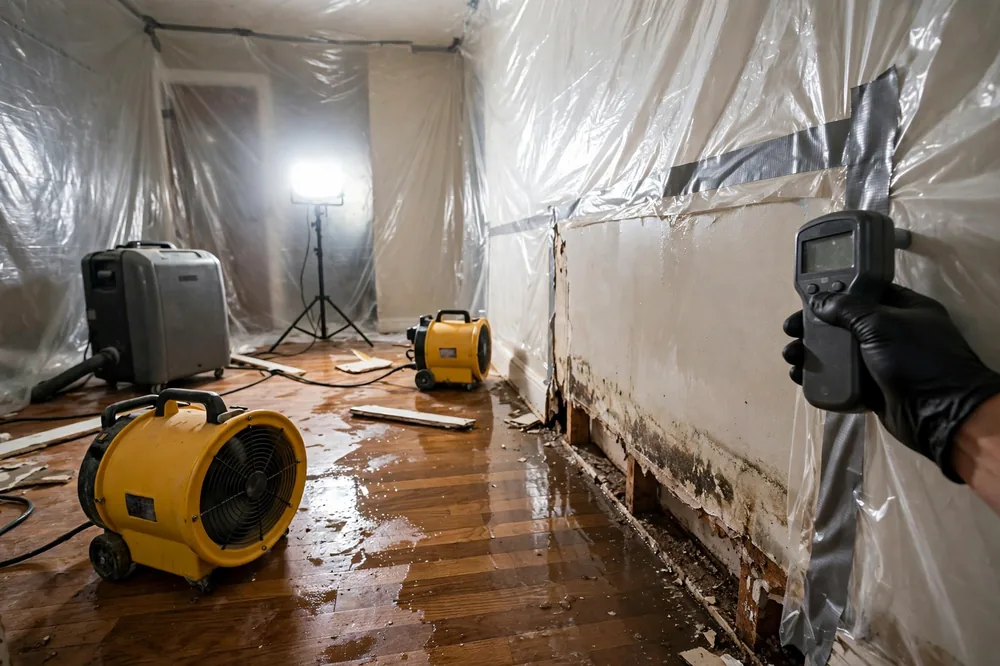
The full job: extraction, drying, cleanup and repairs. Restoration is the umbrella service that carries a wet room all the way back to normal — water out, structure dried and verified, damaged material replaced, finishes restored.
Choose this page when the loss is bigger than a single task: a burst pipe that soaked two rooms, a basement that needs pumping and rebuilding, or any situation where you want one coordinated sequence instead of separate crews.
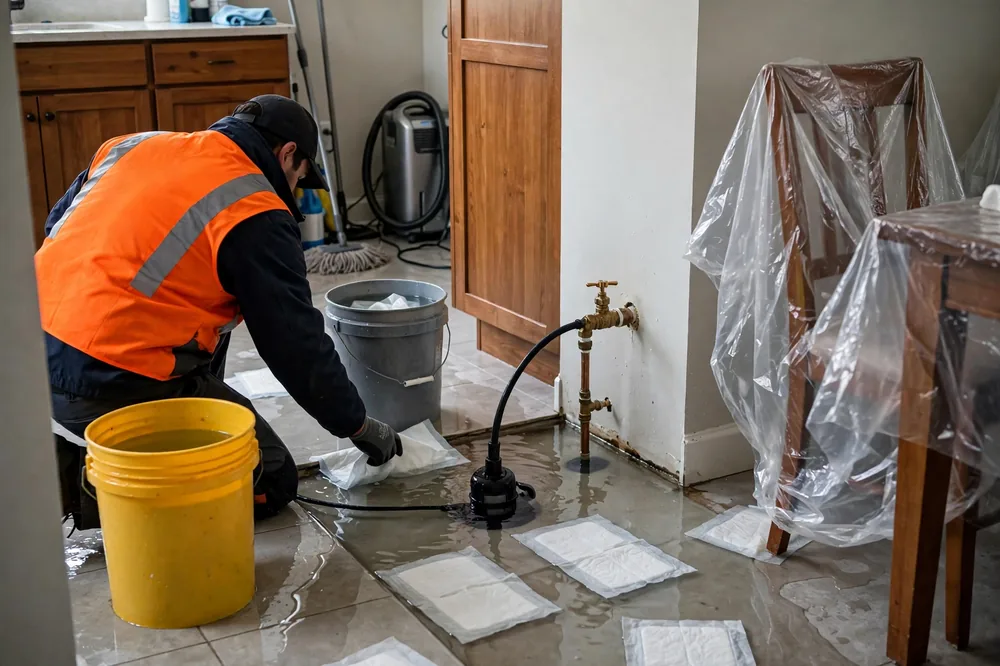
The urgent first phase: stop the spread and stabilize the loss. Mitigation means shutting down the source, extracting what is already down, protecting dry areas and contents, and getting drying equipment running before water migrates further.
This is the service insurers look for first, because fast mitigation is what keeps a contained leak from becoming a multi-room rebuild. If water is still moving, this is the page to start from.
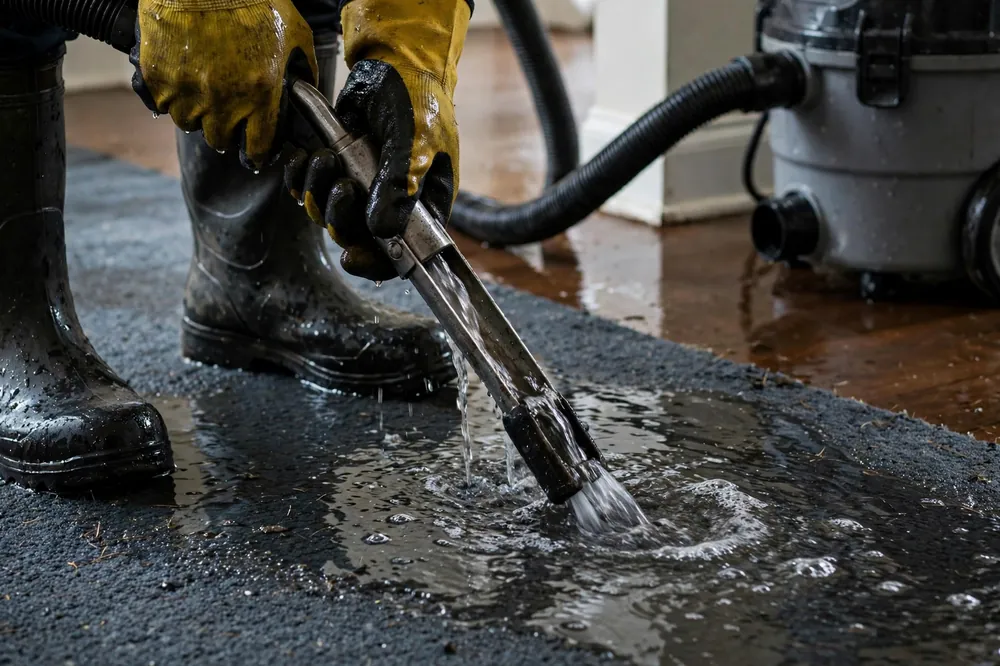
Standing water out, from carpets, hard floors and basements. Pumps handle depth; extraction wands and weighted tools pull water out of carpet and padding that a pump cannot touch, so drying starts from a far better position.
Removal is measured in more than gallons. Pulling water out of materials mechanically is far faster than evaporating it later, which is why thorough extraction on the first visit shortens the whole drying phase that follows.
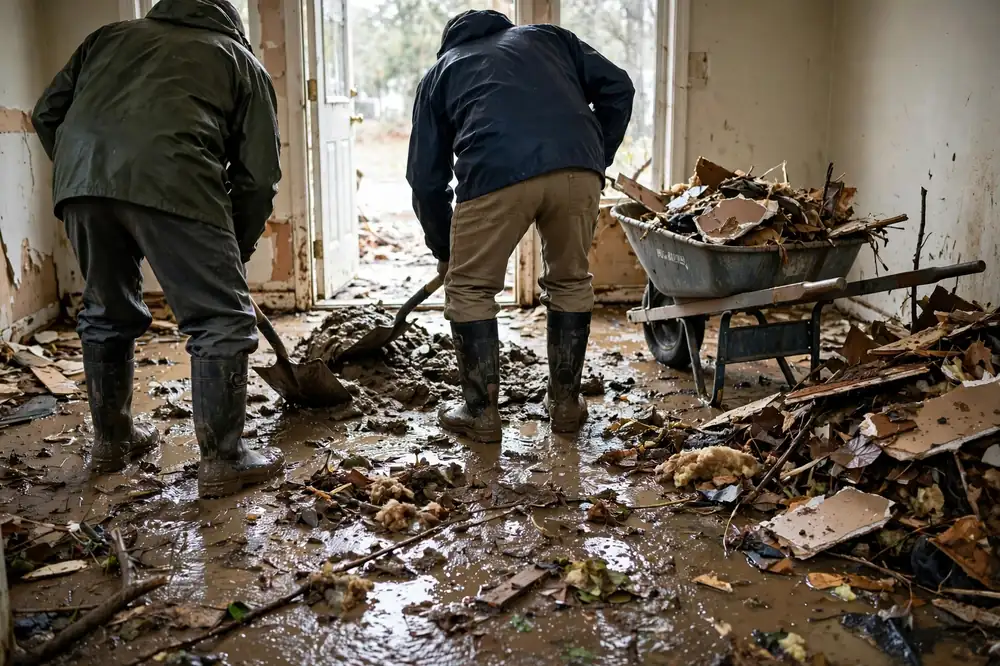
Muck-out, debris removal, wash-down and sanitizing after flooding. River water and storm water carry silt, grit and whatever the current picked up along the way, so flood cleanup is a removal and decontamination job before it is a drying job.
Along the Monongahela, the Youghiogheny and the creek valleys, this is the service that follows a heavy-rain event: ruined material out, hard surfaces washed and treated, then structure dried and checked before anything is rebuilt.
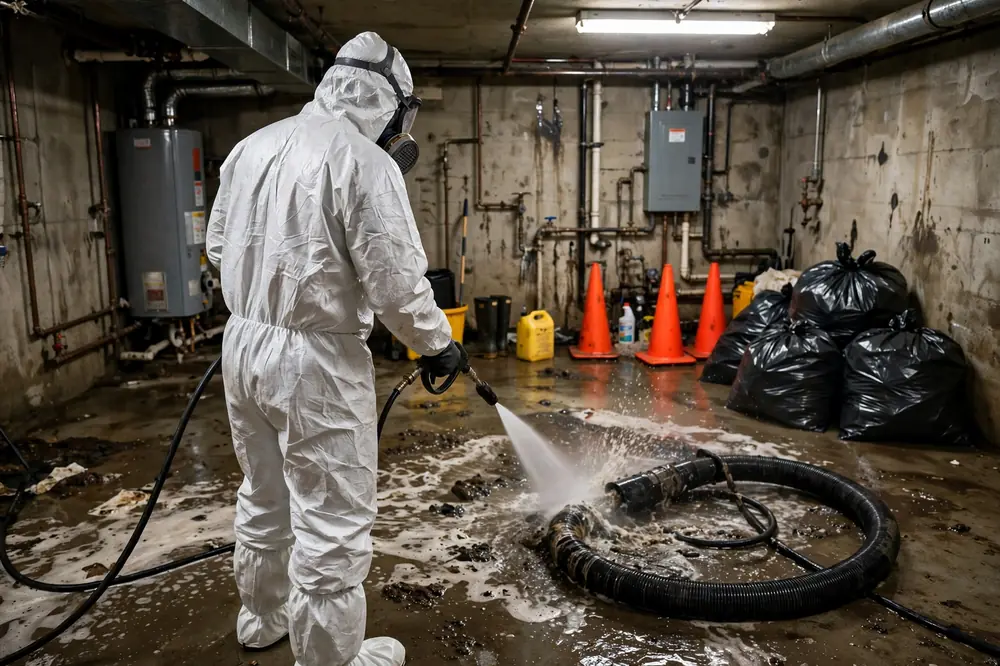
Contaminated-water cleanup with full protective protocol. A sewer or drain backup is a health-hazard job: crews work in protective gear, porous material that absorbed sewage comes out rather than being cleaned in place, and surfaces that stay are disinfected thoroughly.
Pittsburgh's older combined sewers make basement backups a recurring call during heavy rain. If the water came up through a drain, treat it as sewage until a professional tells you otherwise — and keep people and pets out of the area.
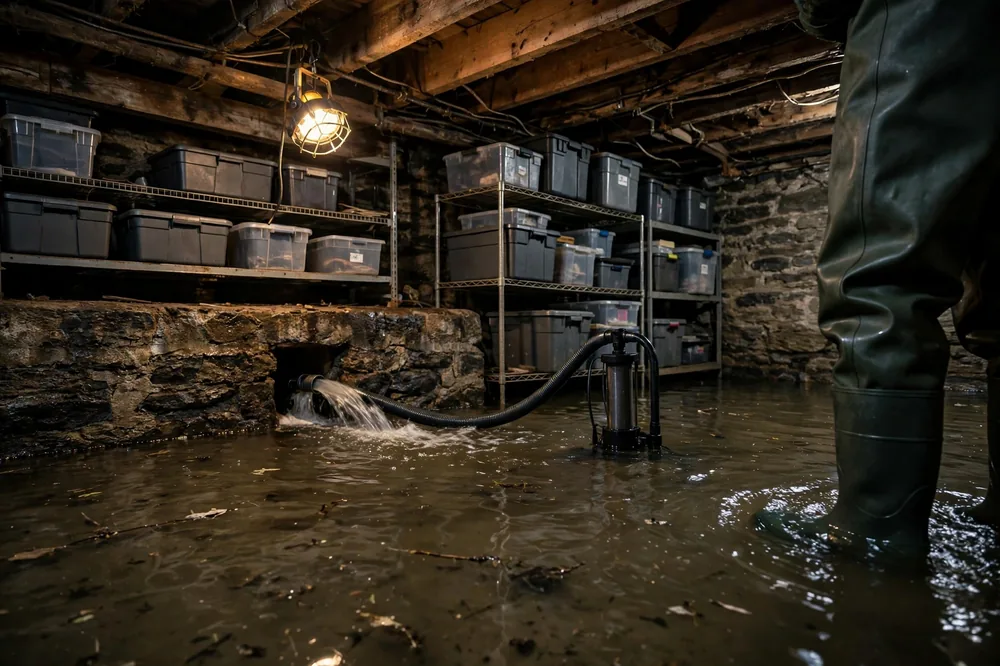
Pumping, drying and source-finding for Pittsburgh basements. Between sump pump failures, foundation seepage, floor-drain backups and pipes running overhead, the basement is where this city's water damage concentrates — finished or not.
A good basement job answers two questions: how do we get it dry, and where did the water come from? Drying without source-finding just schedules the next flood, so the matched pro traces the entry point as part of the work.
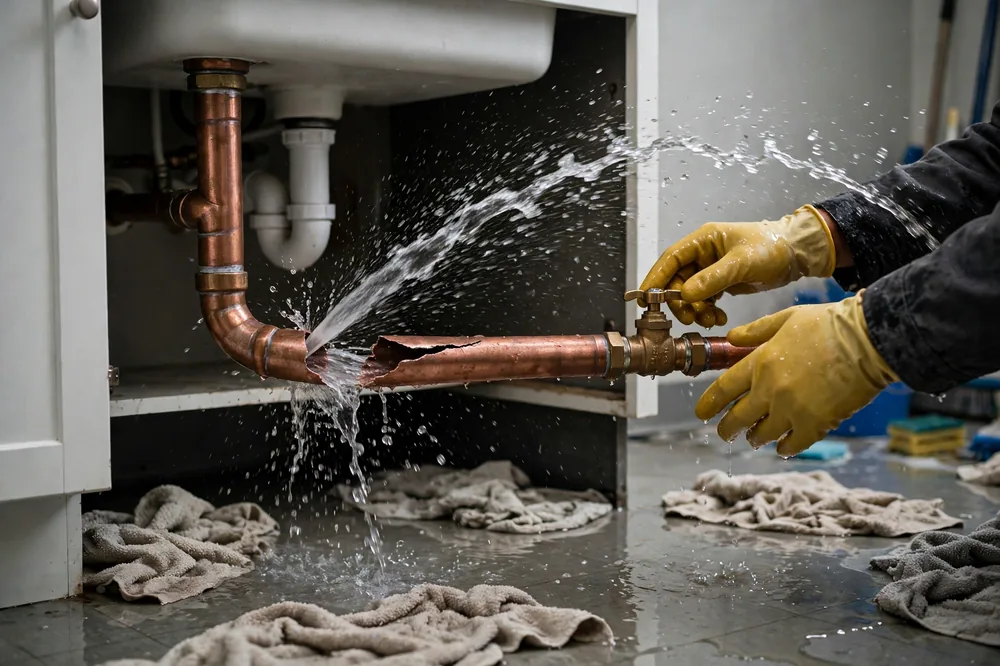
Cleanup and drying after a pipe lets go. Frozen splits in winter, corroded joints in century-old plumbing, a supply line that gives out behind a wall — the plumbing fix stops the flow, and this service handles everything the water did on its way down.
Pipe water travels along joists and inside wall cavities, so the visible puddle is usually the smallest part of the job. Moisture checks in the walls and floors around the break decide how much drying — and how much opening up — the job needs.
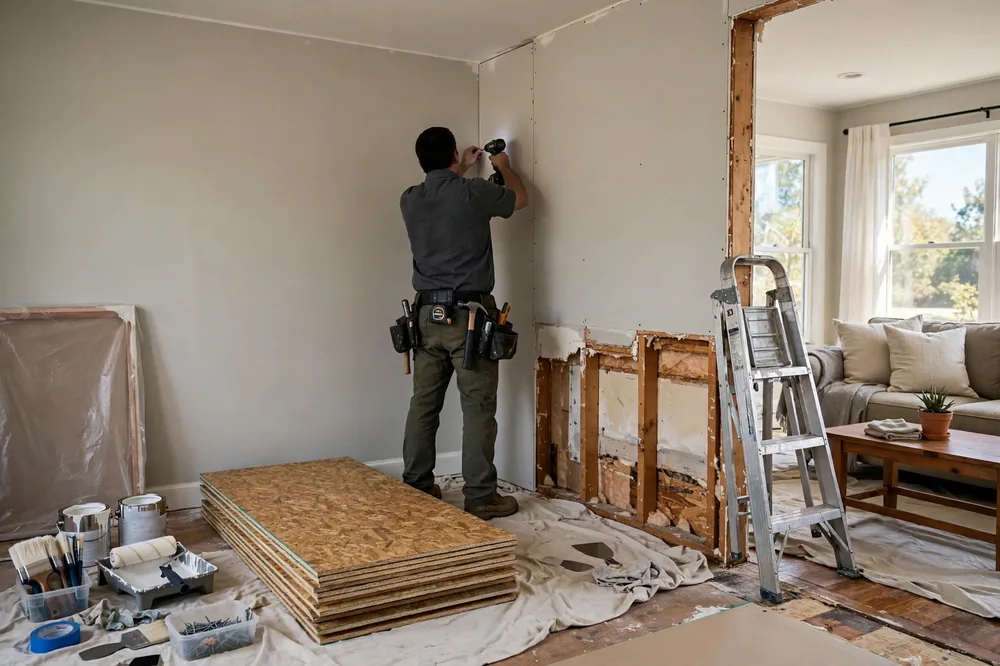
Drywall, flooring, trim and paint, put back properly. Repair is the last phase of a water job and it only starts once moisture readings confirm the structure underneath is dry — closing a wet wall just hides the problem inside it.
This service covers the rebuild list most jobs end with: patched or replaced drywall, flooring sections, baseboards and trim, and paint blended to match the room. The goal is a room that reads as finished, not as patched.
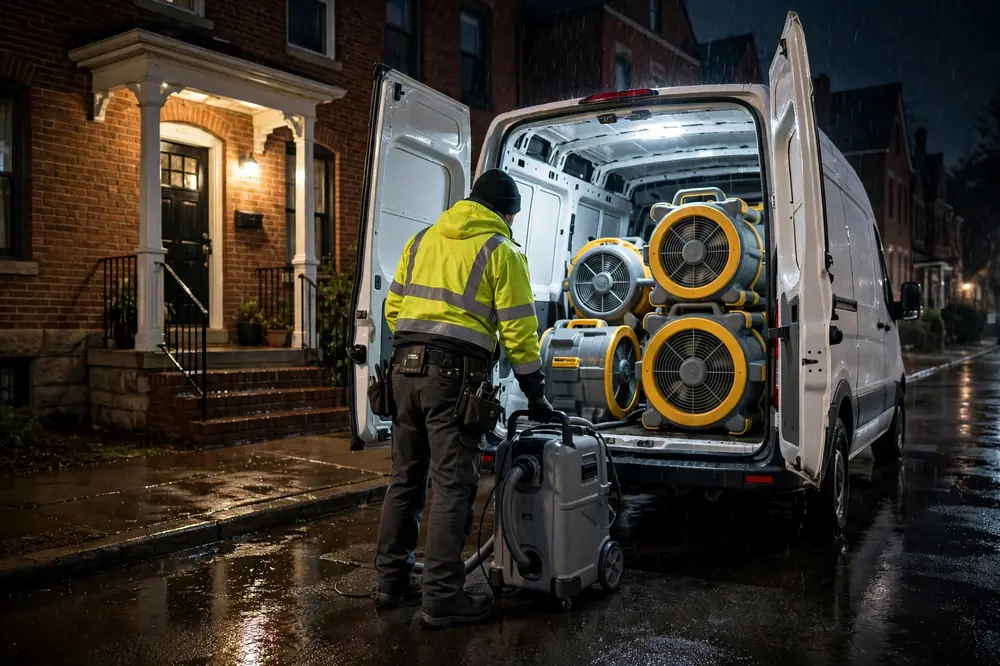
Fast-response extraction for active, spreading water. When a line bursts at night, a water heater empties itself, or storm water is coming in faster than towels and buckets can handle, this is the service the intake call routes first.
While you wait, shut off the water at the main valve if you can reach it safely, keep clear of electrical panels in wet areas, and move what you can off the floor. Then call and describe what is happening — active losses get described in present tense for a reason.
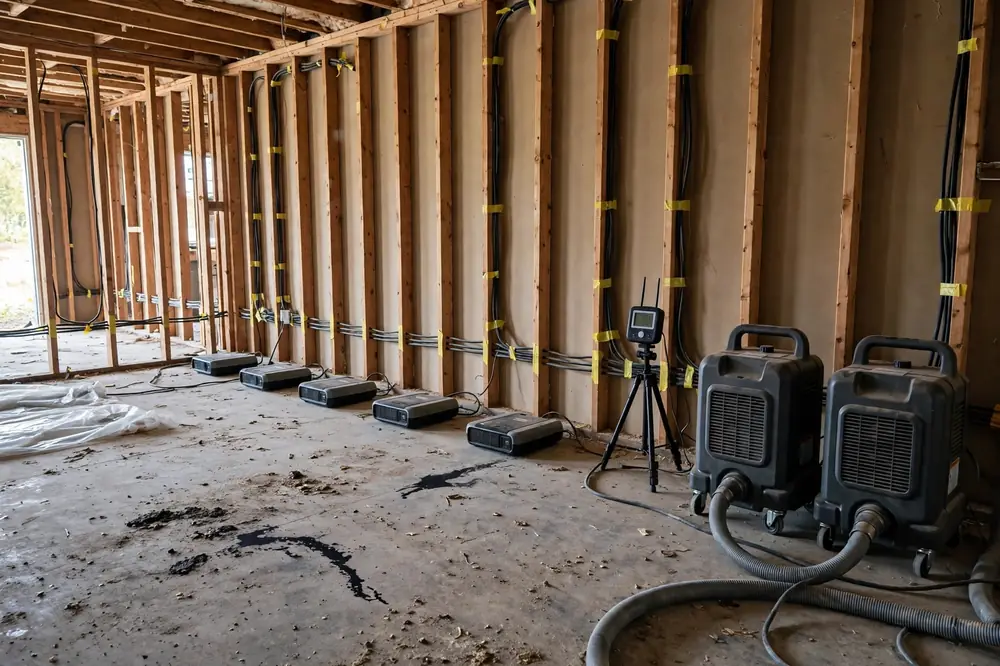
Monitored drying until the structure reads dry. Air movers push evaporation from surfaces, dehumidifiers pull that moisture out of the air, and daily meter readings show whether walls, floors and framing are actually drying or just feeling dry.
Drying is the phase that decides whether a job ends with simple repairs or with mold and rot later. Equipment placement follows the moisture map of your specific rooms — not a standard layout — and it is adjusted as readings change.
Whichever service your job starts with, it moves through the same five steps. The sequence matters: each step protects the one after it, and repairs never jump ahead of drying.
Every service on this page is a water service. The network is matched around extraction, drying, cleanup and repair — not general handyman work — so your job lands with people who do this specific trade every week.
The sequence is enforced on every job: stop the loss, extract, dry, verify, then repair. It is the order insurers expect, and the order that keeps small losses from quietly becoming large ones.
We connect you with an independent local professional; we do not send our own crew and we do not pretend otherwise. The pro confirms the scope of the work with you directly before anything starts.
Not sure which of the ten services fits your situation? These are the questions the intake team hears most. You can also just describe the problem on the call — sorting jobs into services is our side of the work, not yours.
Tell us what happened and where. We will match your job with an independent local water damage professional who serves your neighborhood.
📞 Call NowCalls are the fastest route — water does not wait for inboxes. Email works too if the situation is stable and you are planning ahead.
Describe the water, the source and your neighborhood. We match the job with a local pro from there.
rankandrent2+pittsburgh-water-damage@gmail.com — include your ZIP and a few photos if the situation is stable.
Pittsburgh, PA and 15 suburbs across the 43-ZIP metro — from Wexford to Glassport, McKees Rocks to Monroeville.
One call covers intake, matching and scheduling. The pro confirms scope and cost with you directly before any work starts — nothing begins on a surprise.
📞 Call Now or Browse the services first →