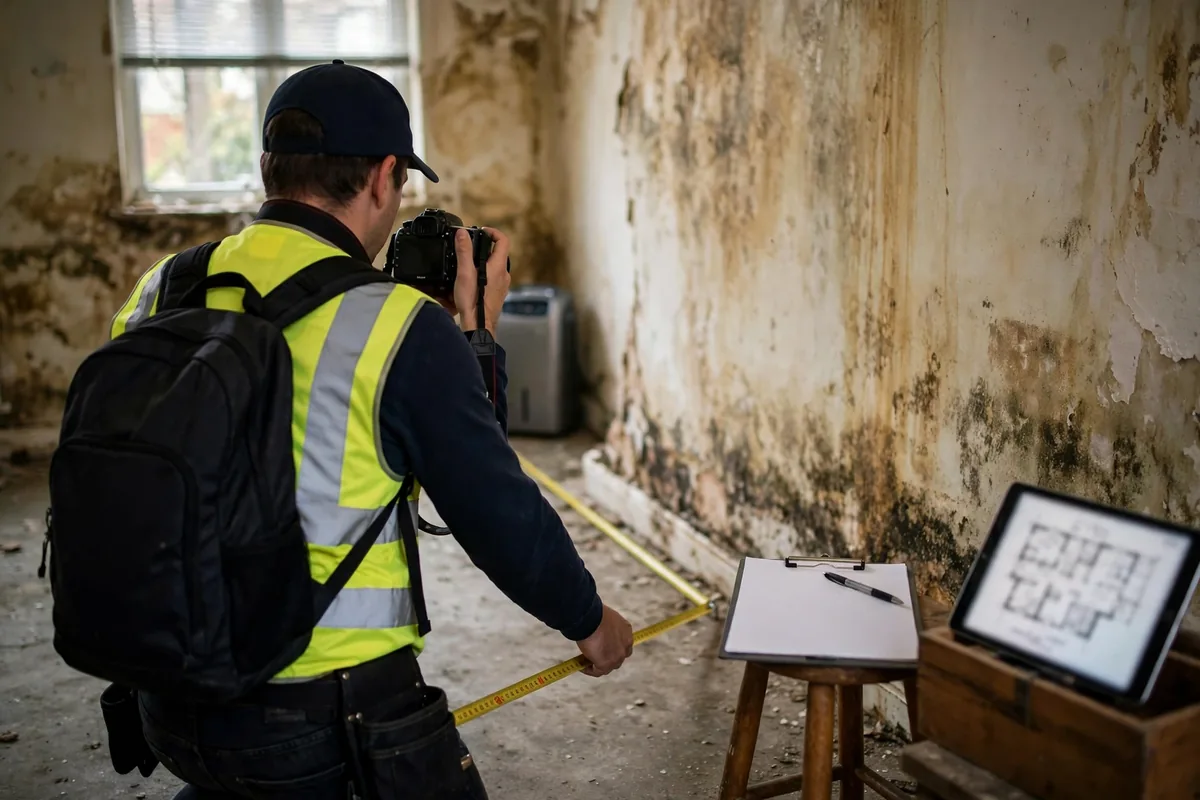
The honest short answer
Nobody can scope a water damage job sight-unseen, and you should be wary of anyone who tries. Water hides. It runs inside wall cavities, under flooring that looks fine from above, and into insulation nobody can see until a section is opened. A figure offered from a photo or a phone call is a guess dressed up as an answer.
Here is how the real process works instead. A pro visits your home, finds the source, takes moisture readings across the affected rooms, and builds a scope: what gets extracted, what gets dried, what has to come out, and what the rebuild involves. The pro then confirms that scope and its cost with you before any work begins. Nothing starts on a surprise.
What this guide can do — honestly and usefully — is show you the five factors that scope is built from. Understand them, and you will understand your own job's scope when you read it, and you will know which questions to ask.
Factor 1: what kind of water it was
Pros sort water into three categories, and the category changes the work more than almost anything else.
Clean water comes from a supply line, a faucet or an appliance fill hose. It starts out safe to handle, so the job centers on extraction and drying, and much of the material it touched can be dried in place.
Grey water has picked up contamination along the way — a washing machine discharge, a dishwasher leak, a tub overflow that has sat. Crews work with more care and more cleaning, and some porous material is judged differently.
Black water is the serious category: sewage backups and creek or river flood water that has flowed over roads and soil. Porous material it soaked — carpet padding, lower wallboard, upholstered pieces — is typically removed rather than dried, and everything that stays is washed and disinfected. More removal and more protocol means a larger scope, from the same size of room.
Factor 2: how much of the home it touched
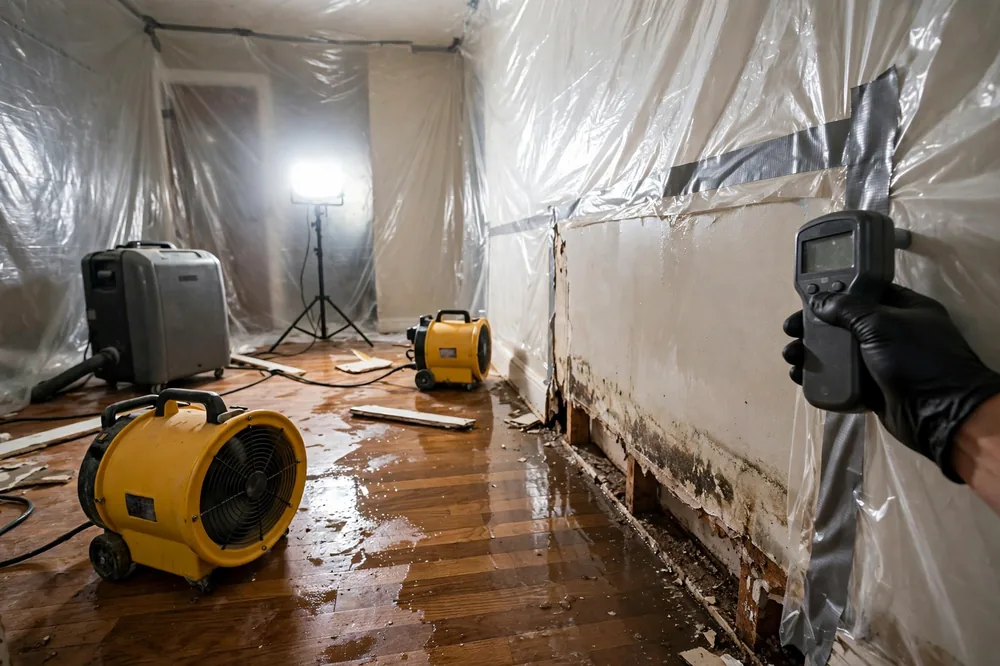
Scope follows the water's actual path, not the size of the puddle you first saw. A supply-line leak in one bathroom is one contained job. The same leak on an upper floor can travel down through a ceiling, two walls and the floor below, touching rooms on two levels — and each affected material in each room is part of the scope.
This is why the first visit includes moisture readings well beyond the visibly wet area. Pros map the loss so the scope covers the whole of it at once. A scope built only on the wet-looking patch is the one that has to grow later, when the hidden spread announces itself as a stain or a smell weeks on.
Factor 3: how long the water sat
Time is the factor most in your hands. Water found and dried quickly often leaves a job that is extraction, drying and modest repair. Water that sat for days has soaked deeper into wood and plaster, swollen joints and flooring, and may have given mold a start on wet drywall, wood and carpet padding.
Each of those adds steps: more material that can no longer be dried in place, careful removal where growth is present, more cleaning before the rebuild. Two identical leaks, found at different times, are two genuinely different jobs — and the difference was set before any crew arrived.
Factor 4: what has to come out
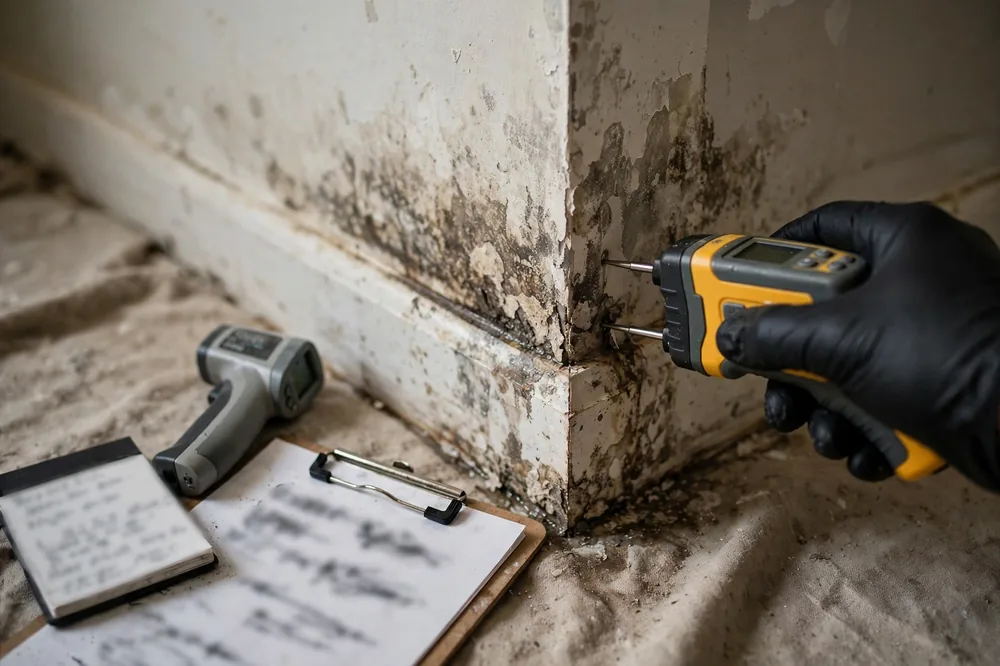
Drying saves material whenever it safely can — that is the point of the equipment and the daily readings. But some material cannot be dried in place: carpet padding that stays soaked, laminate that has swollen, insulation packed wet inside a wall cavity, wallboard on a contaminated-water job. That material comes out, and removal plus replacement both enter the scope.
A fair scope removes only what cannot be saved — and can show you, material by material, why each piece is on the list.
The amount of removal is set by factors one through three: the category of water, the spread, and the time it sat. This is also where documentation earns its keep. Photos and readings taken when material comes out are the record that the removal was needed, which is exactly what an insurance adjuster looks for.
Factor 5: the rebuild — finishes and matching
The last factor is the one homeowners feel most directly, because it is about their own choices. Putting a room back means flooring, wallboard or plaster work, trim, cabinets where they were lost, and paint. A simple room with standard finishes rebuilds simply. A finished basement with hardwood, built-ins and detailed trim asks more at every step.
Pittsburgh's older housing adds a matching dimension. Plaster walls, older trim profiles and floors patched over generations take skill and time to blend with what surrounds them. Talk through matching expectations with your pro during scoping — what will blend closely, what will need a decision from you — so the rebuild plan is settled before work starts, not negotiated in the middle of it.
How insurance looks at the same scope
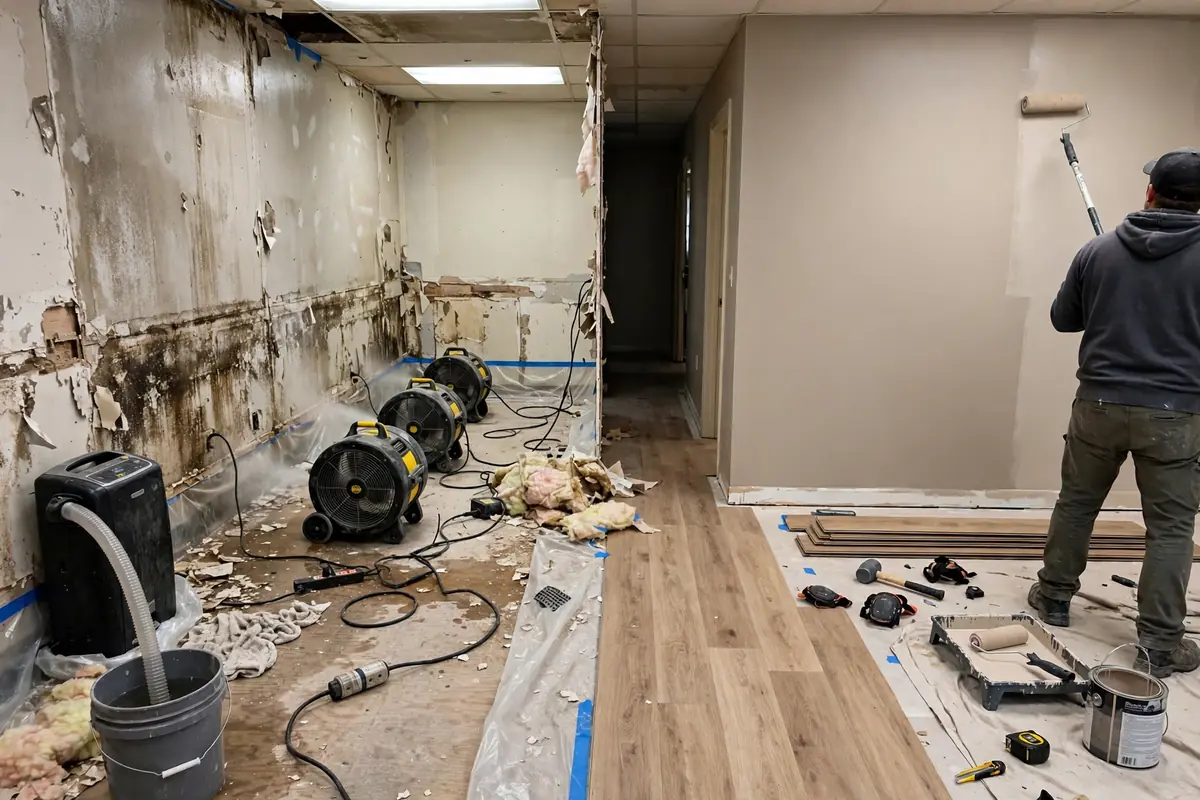
When a claim is involved, an adjuster reads the same five factors you just did. The category of water, the mapped spread, the timing, the removal list, the rebuild — a well-built scope is written in that shared language, supported by photos from before cleanup, the daily moisture log and notes on why each material came out or stayed.
That documentation is not paperwork for its own sake. It is how a claim gets judged on evidence rather than argument. Whatever your policy covers is a question for your insurer — sources differ, and outside water like river flooding is commonly treated differently from a sudden pipe failure — but the pro's job on any claim is the same: document the loss so completely that the claim process is straightforward.
How to keep a job from growing
You cannot change the category of your water or un-spread a flood. But three things genuinely keep a scope from growing beyond the original loss.
- Speed at the start. Stopping the source and starting extraction early is the single strongest lever you hold. Hours matter here more than anywhere else in the job.
- Access. Clear the work area, move stored belongings out of the crew's path, and make daily drying checks easy. A job that flows without daily wrestling moves on schedule.
- Decisions made early. Flooring, paint and cabinet choices settled during the drying window do not stall the rebuild window. Indecision is a quiet schedule cost on every home project, and water jobs are no exception.
None of these change what the water did. They change how much extra the process adds on top of it.
Get help with water damage in Pittsburgh
If you need a scope you can trust, start with one call. Pittsburgh Water Damage Help is a referral service — we connect your job with an independent local water damage professional who serves your part of the metro, visits your home, and confirms the scope and the cost of the work with you before any work begins.