Two words, one job
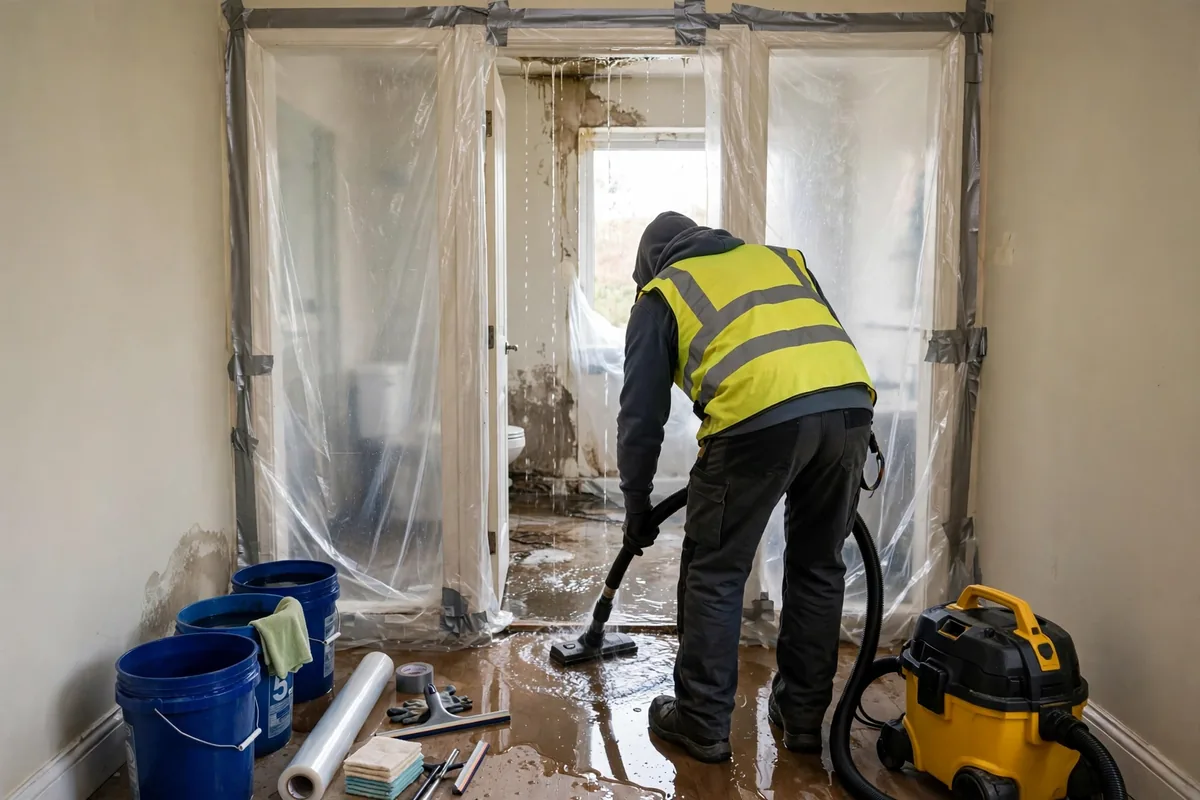
Call about a wet basement in Pittsburgh and you will hear two words that sound like the same thing. A pro will talk about mitigation. Your insurance paperwork will talk about mitigation. Then everyone switches to talking about restoration, as if a different job had started. In a way, it has.
Mitigation means limiting the loss — stopping the water, getting it out, and drying what can be saved so the damage does not grow. Restoration means returning the home to how it was before the water — new drywall where wet drywall came out, flooring where flooring was lost, paint on the walls.
Every water damage job that needs repairs runs through both phases, in that order. Small jobs sometimes end after mitigation, when drying shows that nothing was actually damaged. But no job skips mitigation and jumps straight to repairs. Building new material over wet structure just seals the problem in.
Mitigation: the steps in order
Mitigation is a sequence, and the order is the point. Each step protects the next one.
- Stop the source. A valve is closed, a supply line is isolated, a roof opening is covered. Nothing else holds while water is still coming in.
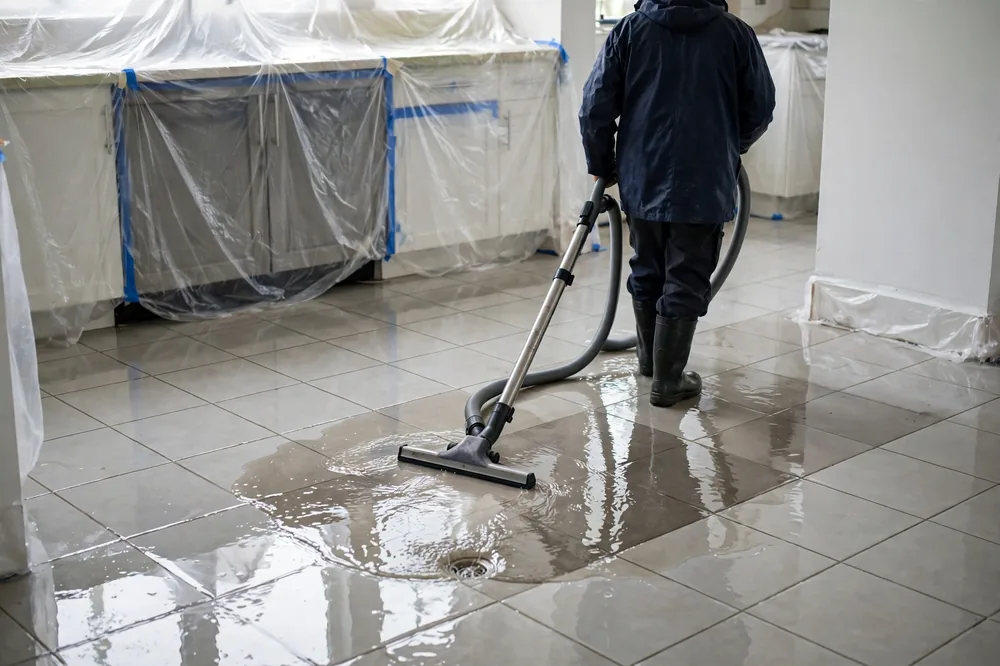
- Extract the water. Standing water comes out with pumps and extraction tools. The longer water stands, the deeper it soaks — so this step carries most of the urgency in the whole job.
- Protect what is still dry. Furniture is moved or blocked up off wet floors, belongings are carried clear, and unaffected rooms are sealed off from the work area where needed.
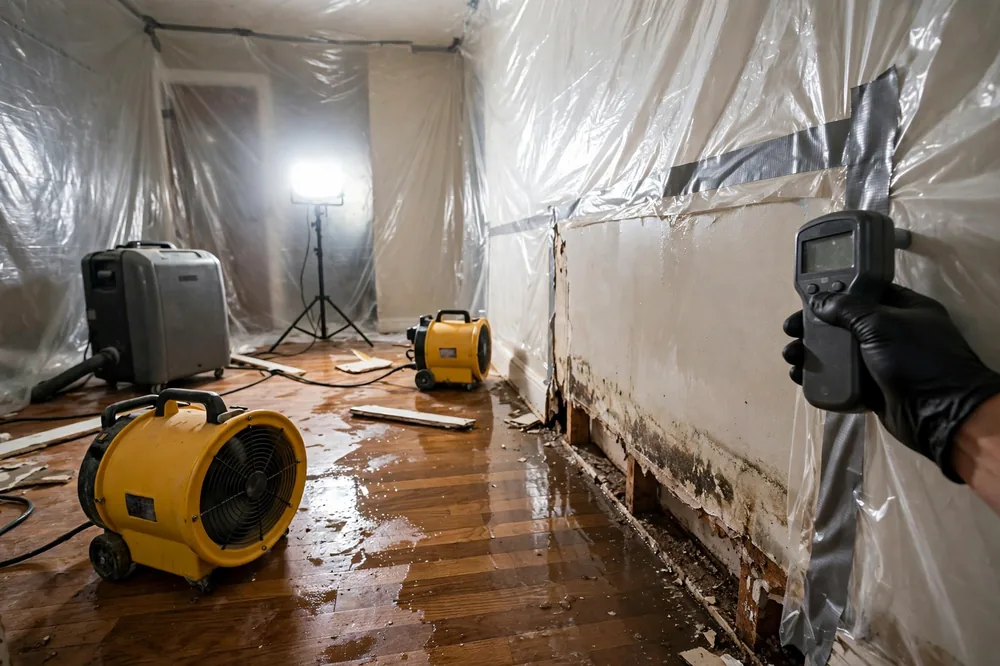
- Dry the structure. Air movers and dehumidifiers are placed from moisture readings, then checked daily. Material that cannot be dried in place — soaked padding, swollen laminate, wet lower drywall on a contaminated job — comes out during this step, and only that material.
- Document everything. Photos, moisture logs and scope notes are made as the work happens. This record guides the drying and later supports an insurance claim, because it shows what was wet, what was done, and when readings reached dry levels.
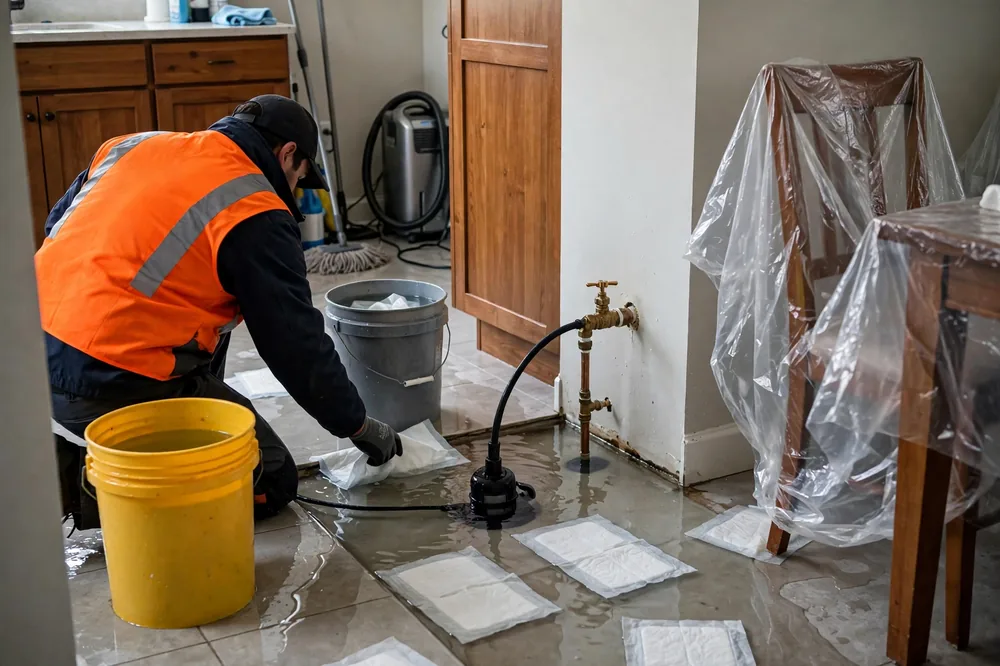
Notice what is not on that list: new material. Mitigation does not hang a single sheet of drywall. Its whole job is to make the loss stop growing and prove, with readings, that the structure is dry and stable.
Where mitigation ends and restoration begins
The handoff between the two phases is not a guess or a date on a calendar. It is a set of numbers. When moisture readings in walls, floors and framing match the dry material elsewhere in the house — and hold there on repeat checks — mitigation is complete. The drying equipment comes out, and restoration can begin on a structure that is verified dry.
Restoration then covers the rebuild: drywall and plaster repair, flooring, trim, cabinets, doors and paint. It also covers the matching work that older Pittsburgh homes demand, where a repaired wall has to blend with plaster that has been in place for decades and trim profiles are no longer stock items.
Mitigation answers the question "has the damage stopped?" Restoration answers "does the room look and work the way it did before?" A job is only done when both answers are yes.
Keeping the phases separate in your mind helps you follow your own job. If fans are still running, you are in mitigation, whatever the calendar says. If paint is going on, mitigation finished — and someone should be able to show you the readings that proved it.
Why insurers and pros say "mitigation"
Homeowners usually search for "restoration" or "cleanup," but the paperwork of a claim runs on the word "mitigation," and there is a practical reason. Policies generally expect a homeowner to take reasonable steps to limit further damage after a loss — to mitigate it. The first phase of a pro's work matches that expectation step for step: stop the source, remove the water, dry the structure, document it all.
That is why adjusters ask about mitigation first and repairs second. The mitigation record — photos from day one, daily moisture logs, notes on what came out and why — is the evidence that the loss was contained promptly and the repair scope that follows is fair. When you talk with a pro or an adjuster, using the same two words the same way keeps everyone describing the same phase of the same job.
What happens when mitigation is skipped or delayed
Water does not pause while a household decides what to do. In the first day, it wicks up drywall and spreads under flooring that still looks dry from above. Within a day or two in warm conditions, mold can begin growing on wet drywall, wood and carpet padding. Wood swells, laminate buckles, and plaster in older homes starts to soften and stain.
The result is a bigger restoration job than the one the home needed on day one: more material removed, more material replaced, more days of work. A delay can also complicate an insurance claim, because the later damage happened after the loss rather than during it. None of this is about panic — it is about sequence. Mitigation is the phase that keeps a bad day from becoming a gut renovation.
A Pittsburgh example walk-through
To make the two phases concrete, here is a typical example — not a specific customer's story, but the shape of a call that comes in often around here. A supply line to a laundry tub bursts in a finished basement in Bethel Park while the family is at work.
Hour one: The homeowner finds the water, closes the main shut-off, and calls. The intake notes the source, the finished basement, and how long the water likely ran.
Hours two to four: The matched pro arrives, confirms the source is stopped, and extracts standing water from the carpet and tile. Baseboards come off the wet walls. Furniture is blocked up or carried to the dry end of the room. Moisture readings map two walls and the floor. Photos are taken of everything. That is mitigation, well underway.
Days two to five: Air movers and dehumidifiers run, with readings checked daily. The carpet padding, soaked beyond drying, is removed and logged; the carpet itself dries and can stay. One section of lower drywall that stayed wet comes out so the wall cavity can dry. Still mitigation — the damage has stopped growing, and the numbers fall each day.
Week two: Readings hold at dry levels. Mitigation closes. Restoration begins: the wall section is patched and finished, new padding and carpet go down, baseboards return, and paint blends the repair into the room. When the crew leaves, the basement is a family room again — which was the point of both words.
Get help with water damage in Pittsburgh
Whatever word your situation starts with, the first step is the same: describe it once, and get the phases started in the right order. Pittsburgh Water Damage Help is a referral service — we connect your job with an independent local water damage professional who serves your part of the metro and confirms the scope of each phase with you before that phase begins.