The short answer
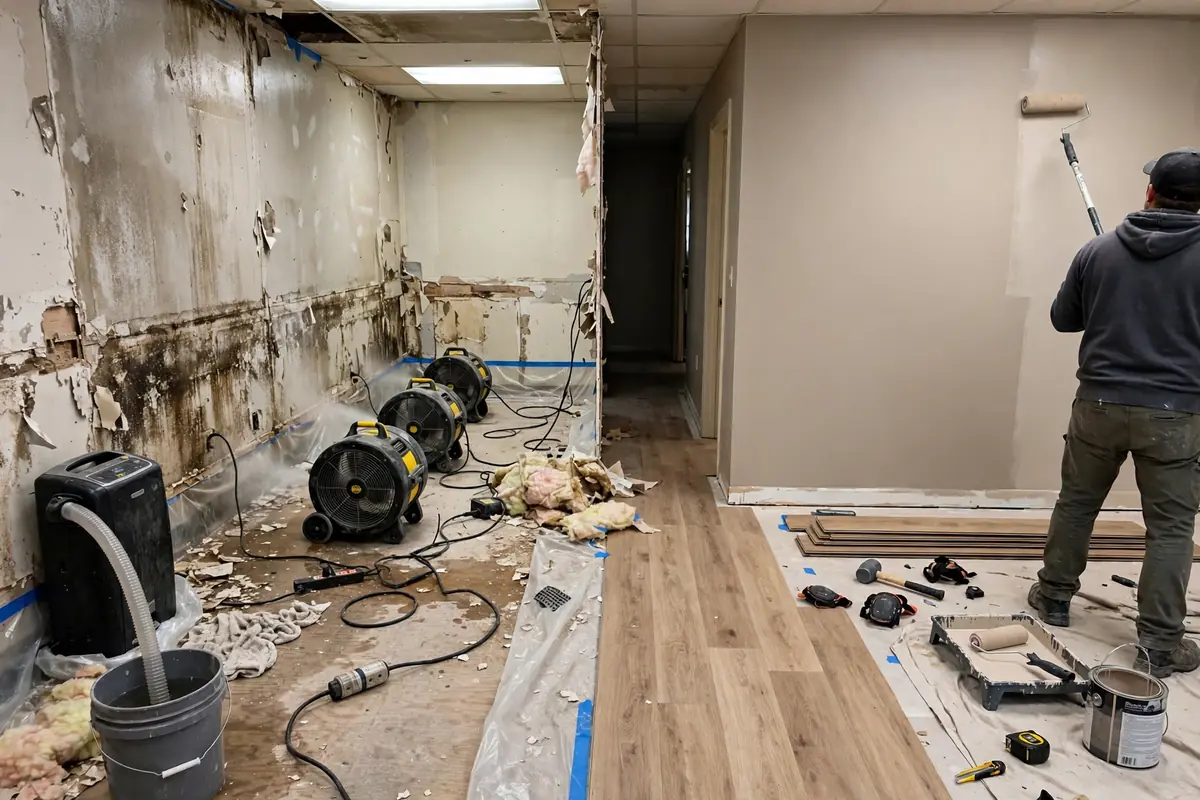
Most water damage jobs in Pittsburgh follow the same three-part rhythm. Extraction and mitigation happen on day one. Drying runs for the next three to five days in most rooms, checked daily with moisture meters. Repairs start only after the structure reads dry, and they take as long as the damage requires — a few days for one room of drywall and paint, several weeks for a finished basement that needs flooring, trim and cabinets put back.
So a small, clean leak caught early can be fully finished in about a week. A flooded basement found after a long weekend, with paneling and carpet to replace, can run a month or more. The difference is rarely the crew. It is the water itself: how much there was, what kind it was, and how long it sat before anyone started work.
This guide walks through each phase in order, so you can look at your own situation and make a fair guess about where your job will land.
Day one: mitigation and extraction
The first visit is about stopping the loss from growing. If the water is still running, the source gets shut off or isolated first — a fixture valve, a supply line, the main shut-off if needed. Nothing else matters while water is still entering the room.
Next comes extraction. Standing water is pulled out with pumps and extraction tools, and soaked carpet padding, if it cannot be saved, comes up so the floor beneath can dry. The crew takes moisture readings in walls, floors and framing to map how far the water traveled, and they take photos. That first-day record matters: it is the baseline for every later drying check and the paper trail an insurance claim needs.
By the end of day one, the room usually looks worse, not better — baseboards may be off, a section of drywall may be opened to let a wet wall cavity dry, and fans are about to go in. That is normal. Day one is demolition only where drying requires it, and it is done on purpose, in a documented way.
Days two to five: the drying window
With standing water gone, the job turns into a drying job. Air movers push air across wet surfaces. Dehumidifiers pull that moisture out of the air. The setup is placed based on the moisture map from day one, not dropped in a corner at random.
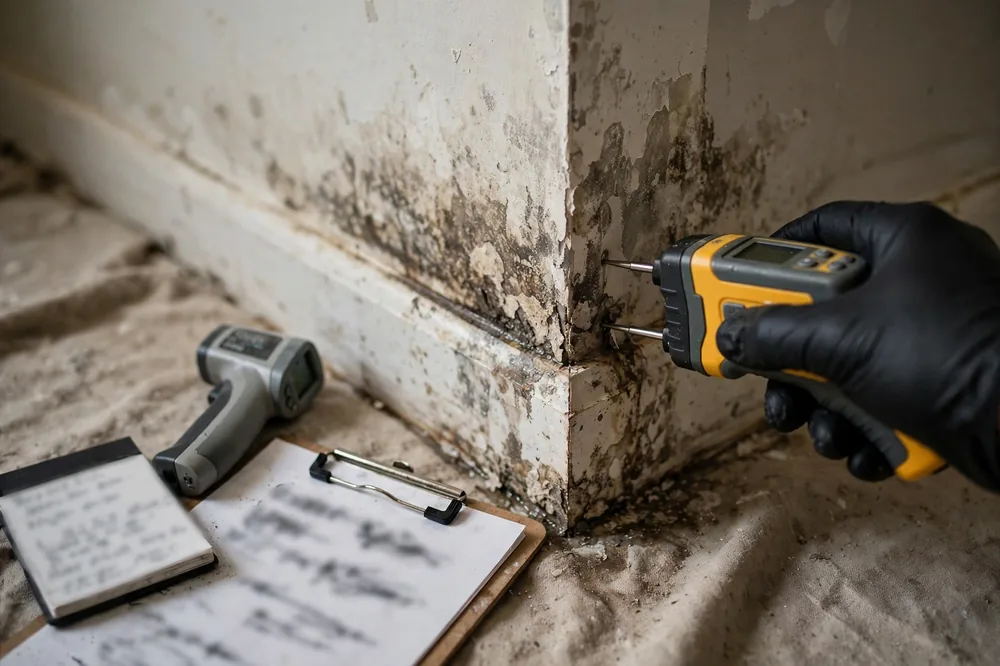
Here is the part homeowners find hardest: the calendar does not decide when drying is done. Moisture readings do. A crew member checks the same spots each day and logs the numbers. Drywall might read dry on day three while the hardwood beside it still holds moisture until day five. Brick and plaster, which fill older Pittsburgh homes, hold water longer than modern drywall and often set the pace for the whole room.
The job is not dry when the floor feels dry under your socks. It is dry when the meter says the wall, the floor and the framing all read the same as the dry parts of your house.
While equipment runs, you will hear it — fans and dehumidifiers are not quiet, and they run through the night as well. That steady run time is what keeps the window at days instead of weeks. Turning equipment off for long stretches lets moisture settle back into materials and can push the finish date out.
Week two and beyond: repairs
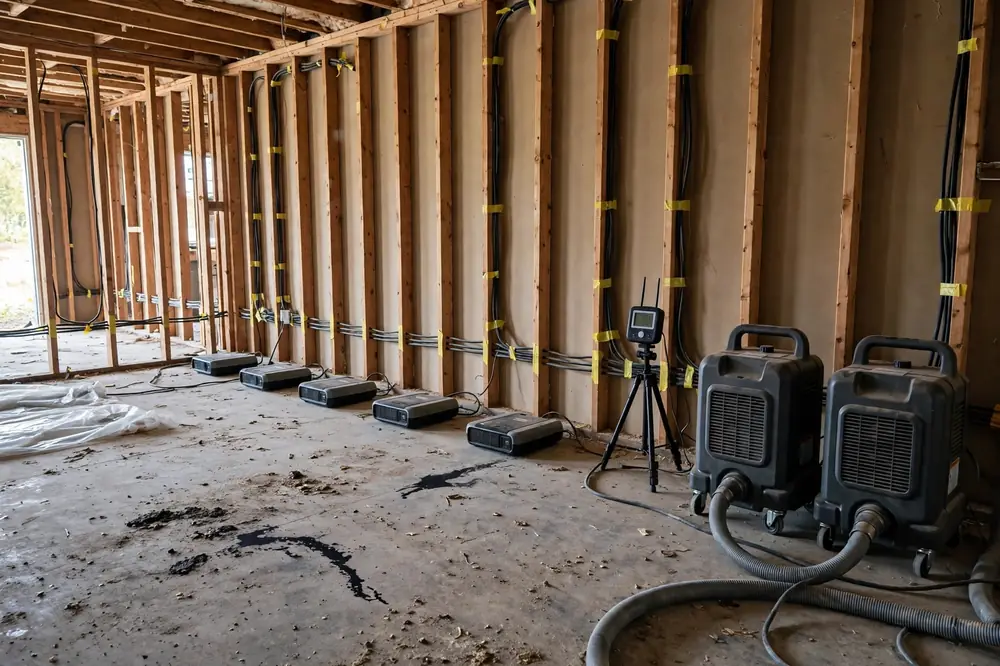
Once readings confirm the structure is dry, the equipment comes out and the repair phase begins. This is the part that feels like a normal home project: drywall hung and finished, flooring laid, trim and cabinets reinstalled or replaced, then paint.
Repair time depends on how much material had to come out. A single wall section and a patch of flooring can be done in a few days. A finished basement — the most common big job in this city — can take weeks, because the room has to be rebuilt in layers: framing checks, wallboard, flooring, baseboards, doors, paint, and any built-ins that were lost.
Matching takes time too. Older Pittsburgh homes have plaster walls, older trim profiles and floors that have been patched before. A good repair crew talks with you early about what can be matched closely and what will need a decision, so the last week of the job does not stall on choices that could have been made in the first.
What stretches a timeline
Four things stretch a job more than anything else. Knowing them helps you read your own timeline with clear eyes.
- The category of water. Clean water from a supply line dries in place most often. Water from an appliance or a drain carries more contamination, and sewage water means porous material it touched usually comes out instead of being dried — extra removal and cleaning days up front.
- How long the water sat. Water found within hours is a drying job. Water that sat for days has soaked deeper, swollen wood, and possibly started mold growth, which adds its own careful removal steps before repairs.
- The materials involved. Tile and concrete dry fast. Hardwood, plaster, laminate and insulated wall cavities dry slowly. A room can only finish when its slowest material does.
- Insurance scope steps. When a claim is involved, an adjuster may need to see the damage, check the scope and approve phases of work. Pros who document well from day one keep this moving, but a large loss can still add waiting time between phases.
Pittsburgh factors
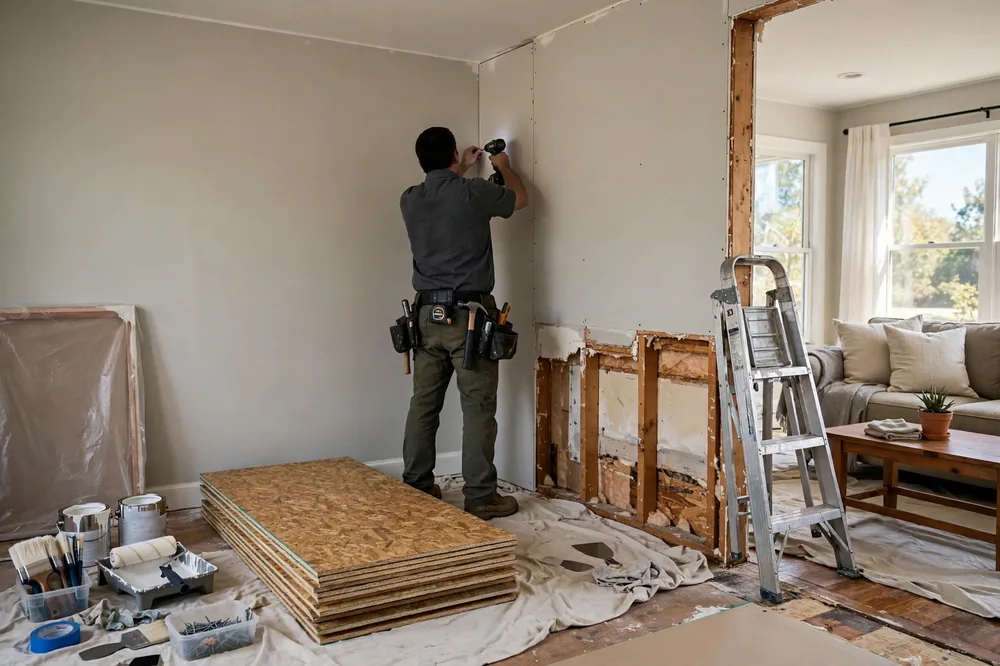
Local housing shapes local timelines. Much of Pittsburgh was built in the early 1900s, and those homes come with plaster-and-lath walls, old cast-iron and copper plumbing, and stone or block foundations. Plaster dries more slowly than drywall, and old pipes mean the leak that started the job sometimes needs its own plumbing repair before the room can close up.
Finished basements are the second factor. In the South Hills, the North Hills and the river towns alike, the basement is living space — a family room, a bedroom, a home office. That means more finished material in the path of the water, and a longer rebuild than an unfinished utility basement would need.
The third factor is the air itself. Homes along the Ohio, Monongahela and Allegheny rivers, and along creeks like Chartiers and Turtle Creek, sit in humid valley air for much of the year. Drying equipment still does the job, but crews plan for valley humidity when they size a setup, especially in summer when outside air works against the dehumidifiers.
What you can do to keep things moving
You cannot dry a wall faster by wanting to, but you can keep the job from stalling. A few habits help more than people expect.
- Keep drying equipment running, and call the pro if a unit stops or a breaker trips.
- Make decisions early — flooring, paint and cabinet choices made during the drying window do not delay the repair window.
- Keep the path clear. Crews check readings daily; easy access to the work area keeps each visit short and on schedule.
- Send your insurer the documentation promptly when asked, and keep your own copies of photos and readings.
- Speak up about schedule limits — guests arriving, a home sale, a baby due — at the start, not in week three. Crews can sequence work around a deadline they know about.
None of this rushes the physics of drying. It simply removes the pauses that have nothing to do with water.
Get help with water damage in Pittsburgh
If you are standing in a wet room right now, the timeline that matters most is the first one: the hours before extraction starts. Pittsburgh Water Damage Help is a referral service — one call describes your situation once, and we connect the job with an independent local water damage professional who serves your part of the metro and confirms the scope with you before any work begins.