Safety before everything
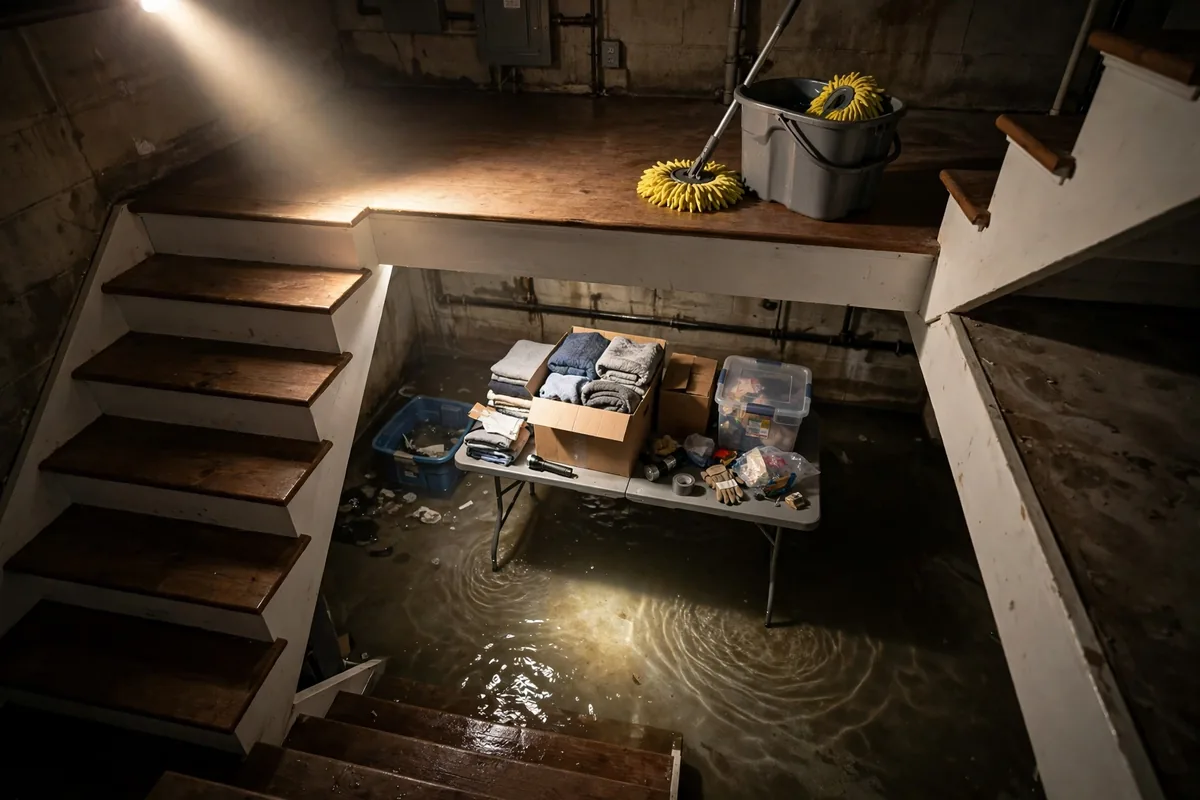
A flooded basement tempts you to wade straight in and start saving things. Slow down for two minutes first. Water and electricity are the dangerous pair in this situation, and Pittsburgh basements put them close together: panels, freezers, washers, furnaces and water heaters all live on the lowest floor.
Look before you step. If water has reached outlets, plugged-in appliances, or your electrical panel, do not walk in until the power to that level is off. If you smell gas, or a gas water heater or furnace is sitting in water, leave the house and call your gas utility from outside. And if the water came up through a floor drain, assume it may involve sewage — keep your skin out of it and keep kids and pets upstairs entirely.
When the scene is safe to enter, wear rubber boots. Basement floors hide sharp edges, and wet stairs are slick. Everything else in this guide comes after these checks, every time.
Hour one: stop the source if there is one
Not every flooded basement has a source you can stop. River and creek water, storm seepage and an overwhelmed drain will do what they do until the weather changes. But a large share of Pittsburgh basement floods are plumbing floods, and those you can end in a minute.
Check the usual suspects. A burst or split pipe, a failed water heater, a washing machine hose let go, a laundry tub supply line. Close the valve at the fixture if you can reach it safely; if not, close the main shut-off — in most local homes it sits near the front basement wall, where the water line enters, or beside the meter. Turning a stiff valve that has not moved in years is normal; use steady pressure, not a wrench swung in anger.
If the sump pit is full and the pump is silent, check its plug and breaker and whether the float moves freely. A pump that hums but does not move water may have a blocked discharge line. Whatever you find, note it. The cause shapes everything the cleanup crew does next.
Document before you touch anything
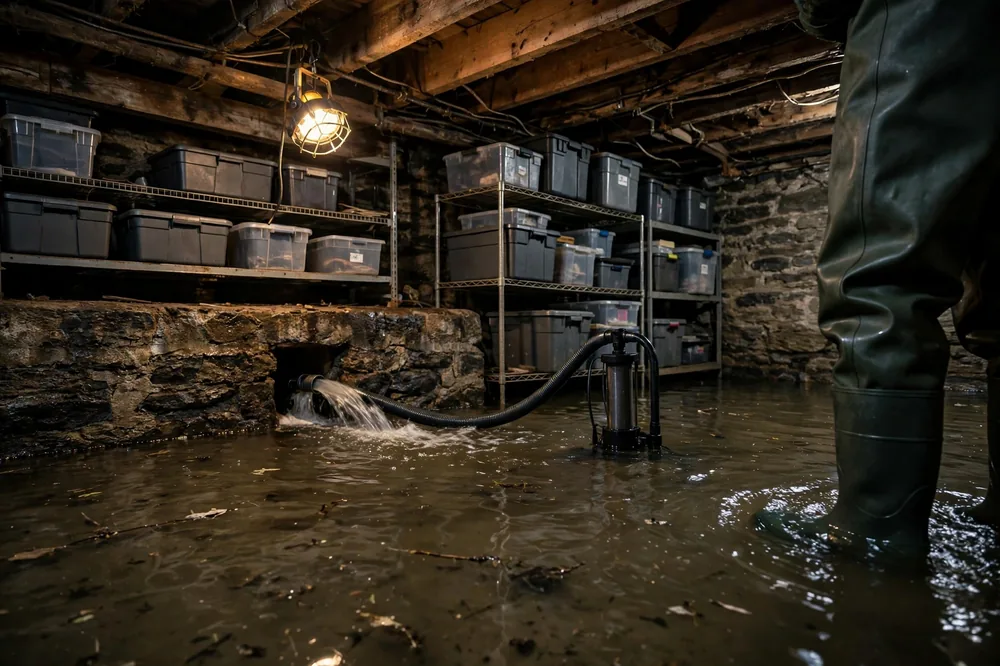
Once the water is stopped — or while it is still standing, if it came from outside — take ten minutes with your phone before you move a single box. Photograph every room from the doorway, then close up: the water line on walls and furniture legs, the source if you found one, soaked belongings, the sump pit, the base of the furnace and water heater.
Take a slow video walk-through too, narrating the date and what you are seeing. This record takes minutes now and does heavy lifting later. It shows your insurer the condition of the basement before cleanup, supports the pro's scope notes, and settles questions about what was damaged that nobody can answer from memory in three weeks.
Photograph the flood before you fight it. Ten minutes of pictures at hour one can carry the whole weight of a claim at week three.
Keep damaged items until your insurer has what it needs from them, unless they are a health hazard — soaked material with sewage on it follows the crew's guidance, not the storage rule. When in doubt, photograph it well and ask on the call.
What to move up, what to leave
With photos done, rescue in this order: papers, photos and electronics first, then rugs and soft items that are still only damp at the edges, then wooden furniture, which gains real protection from being lifted onto blocks or carried up even an hour sooner.
Leave what is already soaked through and heavy. A waterlogged sofa or a saturated particleboard shelf is not saved by dragging it up the stairs, and the effort risks your back and the stairs. Large items can be assessed in place once the water is out. Cardboard boxes on the floor have almost always lost — check the contents, save what is dry inside, and let the boxes go.
Open closet and storage-room doors so air can reach closed spaces later, and if the weather is dry, open basement windows once standing water is gone. Skip that step during a storm or humid river-valley weather, when outside air brings in as much moisture as it removes.
Pumping and first drying — what helps, what is a waste of effort
If you own a small pump or a wet vacuum and the water is shallow and clean, getting an early start on removal genuinely helps — every inch of water off the floor is an inch that cannot wick into walls. Work from the doorway inward, empty the vacuum often, and do not run household electrical gear standing in deep water.
Some common moves waste the effort, though. Mopping and towel-wringing against inches of standing water will exhaust you and change nothing. Household fans alone cannot dry a flooded basement — they move damp air around a damp room. And sealing a wet basement up tight with a consumer dehumidifier running is too slow for the volume of moisture involved; that is equipment-sized work, and the gap between home gear and pro gear is widest right here.
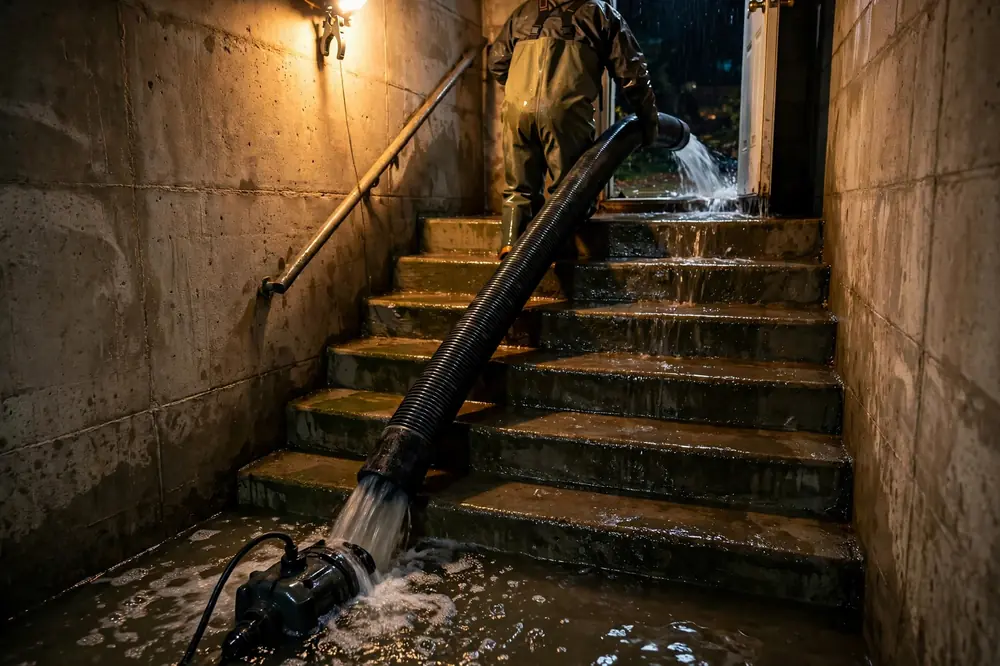
The honest rule: your early work protects belongings and buys the crew a head start. The extraction, the moisture mapping and the drying setup are what actually save the room.
The call: what the intake will ask you
When you call, the intake is short, and it helps to have the answers ready. Where is the water — which rooms, how deep? Where did it come from, if you know — a pipe, the sump, a drain, or from outside the house? When did it start, or when did you find it? Is it still coming in? Is the power on in the basement, and did water reach the panel or furnace?
Those answers decide what the matched pro brings: pump capacity, crew size, protective gear for contaminated water, and drying equipment sized to a finished family room rather than a utility space. Mention finished rooms, carpet, paneling and anything stored that matters to you. Nothing you say obligates you — the pro confirms the scope at your home before any work begins.
The next morning: drying checks and decisions
By the next morning, the bulk water should be out and drying equipment running. Expect a check visit: the pro reads moisture in the same spots logged on day one, adjusts air movers, and empties or checks dehumidifiers. The numbers should be falling. If a wall is not falling, that is when a small opening in the base of the wall may be discussed, to dry the cavity behind it.
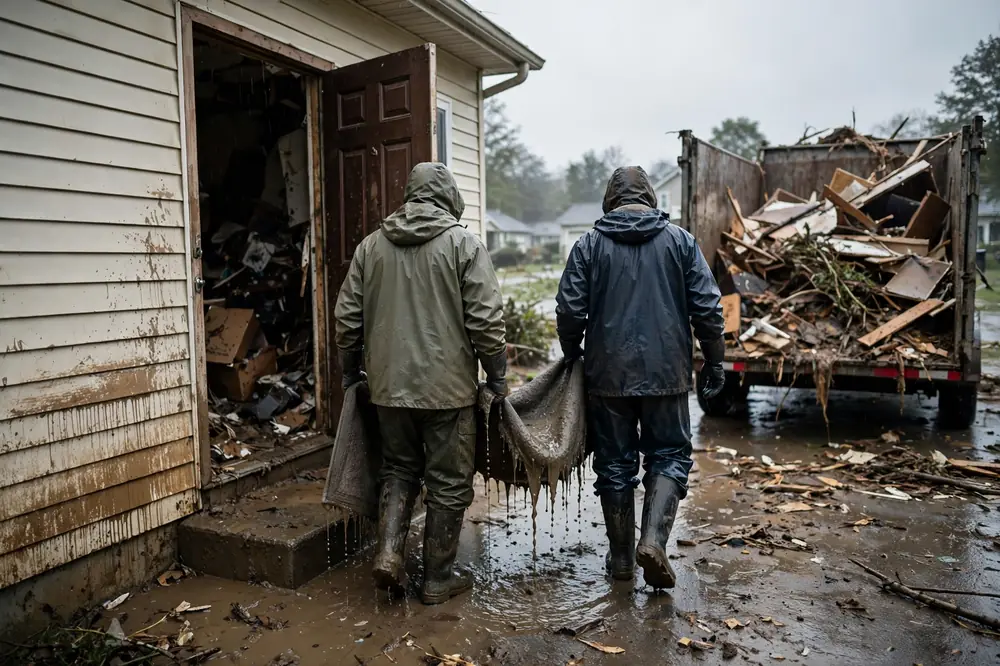
This is also decision day. Which materials dried and stay, which come out. What the repair phase will look like. What your insurer needs next. Decisions made calmly on day two, with readings in hand, are better than decisions made standing in water on day one — one more reason the first day is about safety, source, photos and the call, in that order.
Get help with water damage in Pittsburgh
If your basement is under water now, work the order above and make the call early in it — pumping and drying started today save material that cannot be saved next week. Pittsburgh Water Damage Help is a referral service: one call describes your basement once, and we connect the job with an independent local water damage professional who serves your part of the metro and confirms the scope with you before any work begins.